

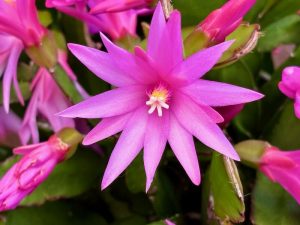
Rhipsalidopsis gaertneri – The Cheerful Easter Cactus
Rhipsalidopsis gaertneri, widely known as the Easter Cactus, is one of the most charming and easygoing houseplants a gardener can grow. With its brightly colored, star-shaped flowers that erupt in vivid shades of pink, red, orange, or white, it puts on a spectacular floral show in spring, often right around Easter — hence the name. Though similar to the more familiar Christmas Cactus (Schlumbergera spp.), the Easter Cactus blooms later and has subtle differences that set it apart. It lacks spines, has a more upright and bushy habit, and produces flowers that are radially symmetrical rather than the elongated, tubular blooms of its cousins.
This easy-care epiphytic cactus grows naturally on trees in the misty mountains of southeastern Brazil, where filtered sunlight and regular moisture define its native habitat. In cultivation, it adapts well to indoor growing and rewards even beginner plant lovers with an annual explosion of color. Whether displayed in a hanging basket, set on a bright windowsill, or featured as part of a mixed houseplant collection, Rhipsalidopsis gaertneri is both a conversation starter and a joy to grow.
Family Ties: Rhipsalidopsis gaertneri in the Cactaceae
The Easter Cactus belongs to the Cactaceae family — a surprisingly diverse group that also includes desert dwellers like the prickly pear and saguaro, as well as other forest-dwelling epiphytes such as the Christmas and Thanksgiving cacti. Though cacti are generally associated with arid environments, Rhipsalidopsis gaertneri evolved in subtropical cloud forests where it clings to tree branches and absorbs moisture from the air and rainfall. This adaptation gives it a growth habit and care requirements that are quite unlike the typical desert cactus.
Taxonomically, the species has bounced between several genera over the past century, being previously classified under Epiphyllum, Hatiora, and Schlumbergera. Most current botanical references now place it back in Rhipsalidopsis, distinguishing it based on floral structure and DNA analysis. Despite the changes, it continues to be commonly known and loved as the Easter Cactus in horticultural circles.
A Closer Look at the Easter Cactus
Mature plants of Rhipsalidopsis gaertneri form a bushy, pendant habit with woody bases and thick, leafless stems composed of flat, green segments called cladodes. These segments are the primary photosynthetic organs and measure around 4–7 cm (1.6–2.8 inches) long and 2–2.5 cm (0.8–1.0 inch) wide. They are smooth, with gently scalloped margins and no spines — making the plant safe for families and pets.
The flowers are the true highlight. Each one opens at the tip of a stem from a small notch known as an areole. Blooms are radially symmetrical, star-like, and range from 4–7.5 cm (1.6–3 inches) in diameter. The petals are separate (unlike those of Schlumbergera), and the flower opens into a vibrant funnel shape in bright scarlet, pink, orange, or white. After pollination, small red fruits may follow.
The plant’s natural rhythm includes a dormancy period in winter, followed by vigorous blooming in early to mid-spring. With the right environment, the Easter Cactus will bloom reliably around the Easter season each year.
How to Grow Rhipsalidopsis gaertneri
Light
Easter Cactus thrives in bright, indirect light. A few hours of gentle morning sun are welcome, but avoid hot afternoon rays, especially in summer, as they can scorch the tender stems. A spot near an east- or north-facing window is often ideal. Insufficient light may result in poor blooming and weak, leggy growth.
Soil
Well-drained soil is essential. A mix designed for epiphytic cacti or orchids works well — something loose, slightly acidic, and rich in organic material. You can create your own mix using equal parts potting soil, orchid bark, and perlite or pumice to encourage airflow around the roots. The key is to avoid compacted or water-retentive soil.
Watering
Water thoroughly when the top third of the soil feels dry. During the active growing season (spring through early fall), the plant enjoys consistent moisture — but never soggy soil. In winter, allow the soil to dry more between waterings to encourage a rest period. Hanging baskets may require more frequent watering due to increased airflow.
Fertilizing
Feed with a balanced, diluted fertilizer every 2–4 weeks from late winter through summer. A 10-10-10 or 20-20-20 formula works well. Avoid fertilizing in fall and winter when the plant is resting. To encourage blooming, switch to a bloom-boosting formula (such as 10-30-20) about two months before expected flowering.
Temperature and Humidity
This tropical cactus prefers mild, stable conditions. Ideal temperatures range from 16–24°C (60–75°F), and it can tolerate brief dips to around 10°C (50°F), especially during its winter rest. Average household humidity is usually sufficient, but in dry homes, occasional misting or a pebble tray can help prevent dehydration.
Propagation of Rhipsalidopsis gaertneri
Easter Cactus is easily propagated from stem segments. The best time to propagate is just after the flowering period. Simply snap off a healthy segment or two and allow them to callus for a few days. Plant them in a moist, well-drained propagation mix and keep in bright, indirect light. Roots typically form in 3–4 weeks.
Though Rhipsalidopsis gaertneri can be grown from seed, this method is rarely used outside of specialized breeding due to the long maturation period. Vegetative propagation ensures the new plants retain the characteristics of the parent — including flower color and growth habit.
Pests and Diseases
This cactus is relatively pest-free, but like all houseplants, it can occasionally attract mealybugs, spider mites, or aphids — especially in dry indoor environments. Regular inspection and wiping down the segments with a damp cloth can prevent infestations. Insecticidal soap or neem oil works well for minor issues.
Overwatering is the most common cause of problems. Root rot can develop if the plant sits in waterlogged soil. If the stems become mushy or translucent, it’s time to unpot, trim away affected roots, and repot in fresh, dry mix.
Fungal leaf spots and bacterial soft rot are rare but can occur if air circulation is poor. Always use clean tools and avoid splashing water onto the stems when possible.
How to Use Rhipsalidopsis gaertneri in the Home or Garden
This cactus shines as a decorative houseplant. Its arching growth habit makes it ideal for hanging baskets or decorative containers placed on high shelves. The floral display in spring is showstopping, making it an excellent centerpiece or seasonal accent. It also pairs beautifully with other low-light tropicals like ferns, peperomias, or African violets.
In mild climates (USDA Zones 10–11), it can be grown outdoors year-round in shaded patios or mounted on trees, much like orchids or bromeliads. Wherever it’s grown, Rhipsalidopsis gaertneri offers tropical charm, ease of care, and a dependable spring bloom that never fails to lift the spirits.
