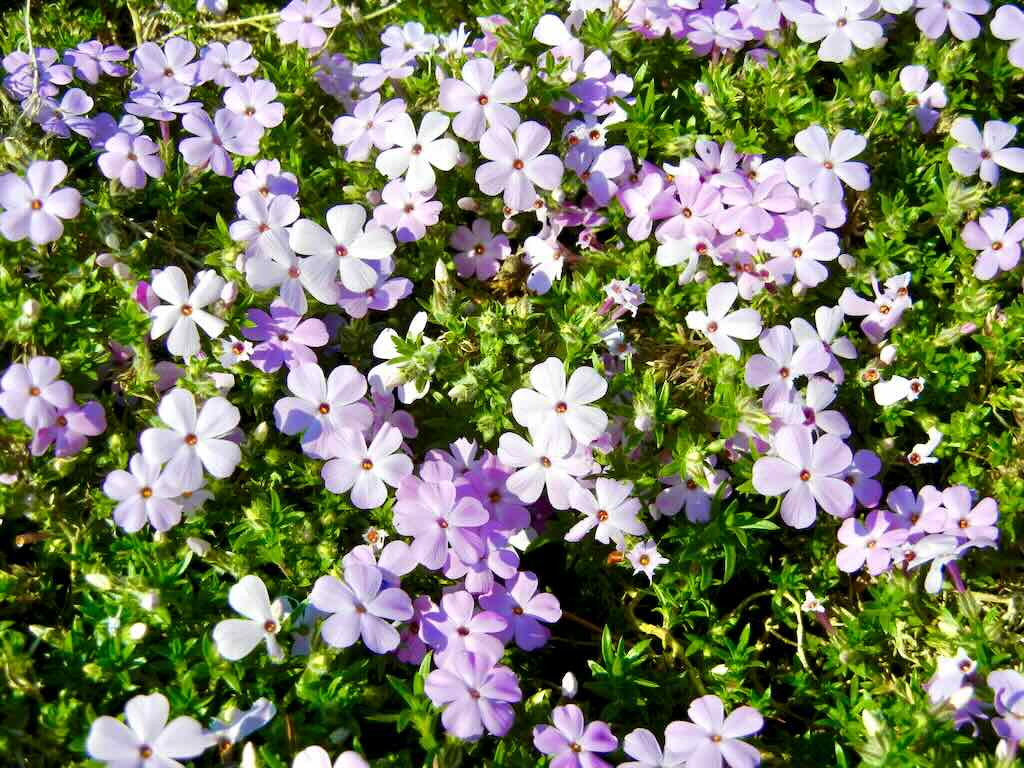

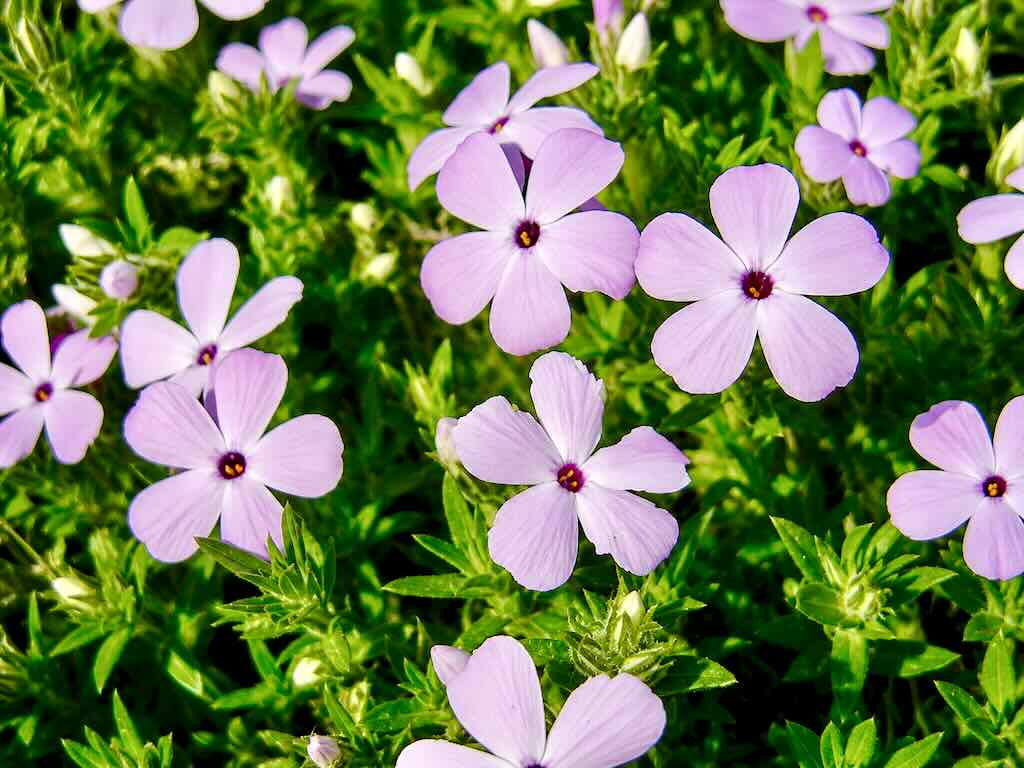
Phlox douglasii ‘Rosea’ belongs to the Polemoniaceae family of plants. This compact evergreen perennial is commonly known as Tufted Phlox ‘Rosea’ or Columbia Phlox ‘Rosea’. It is native to the northwestern United States.
Phlox douglasii ‘Rosea’ is a charming perennial that forms compact tufts of foliage. It has needle-like or awl-shaped dark green leaves that add texture to the plant’s appearance. The plant reaches a height of approximately 10 centimeters or 4 inches, making it ideal for edging, rock gardens, or containers.
In late spring, Phlox douglasii ‘Rosea’ produces delicate purplish-pink flowers that are about 1.5 centimeters or 1 inch wide. The flowers grow in terminal clusters, creating a lovely display of color. The plant’s compact habit and profuse blooming make it a popular choice for adding a touch of charm to various garden settings.
Cultivation of Phlox douglasii ‘Rosea’:
To successfully grow Phlox douglasii ‘Rosea,’ consider the following guidelines:
Light Requirements: Plant Phlox douglasii ‘Rosea’ in a location that receives full sun or partial shade. Adequate sunlight ensures proper growth and abundant flowering.
Soil and Drainage: This perennial prefers rich, fertile soil that is well-drained. Good drainage is essential to prevent waterlogging, which can be detrimental to the plant’s health.
Watering: Provide regular watering to Phlox douglasii ‘Rosea,’ ensuring that the soil remains evenly moist. Avoid overwatering or allowing the soil to become excessively dry between waterings.
Propagation: Phlox douglasii ‘Rosea’ can be propagated through softwood cuttings. Take the cuttings from non-flowering stems and plant them in well-draining soil. Provide adequate moisture and protect the cuttings until they establish roots.
Maintenance: Deadheading the faded flowers promotes continuous blooming and maintains the plant’s neat appearance. Remove spent blooms by cutting back the flowering stems.
Pest and Disease Resistance: Phlox douglasii ‘Rosea’ is generally pest-free. However, keep an eye out for powdery mildew, a common issue for some Phlox species. Ensure proper air circulation around the plant and avoid overhead watering to minimize the risk of powdery mildew.
By following these cultivation tips, you can successfully grow Phlox douglasii ‘Rosea’ and enjoy its delightful purplish-pink flowers, compact habit, and evergreen foliage.