Prunus ‘Matsumae Hanagasa’—the Pink Parasol Cherry for small gardens
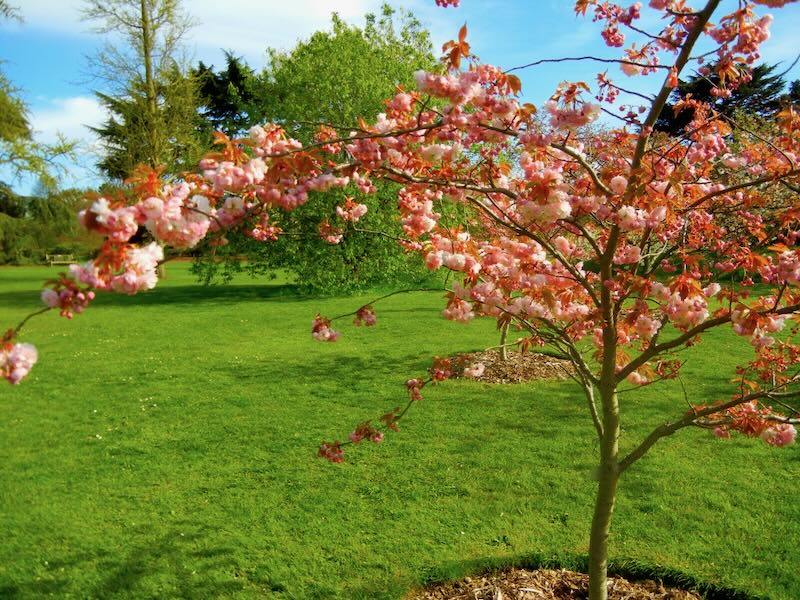
Prunus ‘Matsumae Hanagasa’ brings theatre to spring with pendant clusters of double, pale-pink blossoms that dangle like tiny parasols. Gardeners also list it as Pink Parasol Cherry and Matsumae Cherry. This compact ornamental cherry belongs to the Rosaceae family, the same wide clan as apples and plums. You grow it for bloom, but you keep it for structure, coppery new leaves, and warm fall color. It suits patios, townhouse plots, and any border that needs a reliable spring focal point without the worry of an oversize tree.
Family and origin
This cultivar sits within the genus Prunus, a group famed for showy flowers and clean branching. Prunus ‘Matsumae Hanagasa’ arose in Matsumae, Hokkaido, Japan, where cherry breeding became a civic art in the mid-20th century. Plantsman Masatoshi Asari selected many of the “Matsumae” forms to combine graceful shape with heavy bloom. This selection reached Western gardens later and won attention for its cascading flower trusses and tidy size. It fits the modern garden brief: strong flower power, manageably small, and handsome through more than one season.
Flowers and seasonal color of Prunus ‘Matsumae Hanagasa’
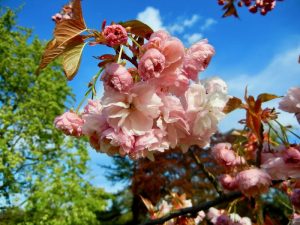
The flowers define this tree. Each cluster hangs on a slim stalk, so the blossom mass drapes beneath the branch like a string of lanterns. Individual blooms are double, often with 25–50 petals. Color opens soft shell pink, sometimes with a cooler blush at the petal edges, and many flowers show a distinctive green eye at the center. As days pass, the pink can deepen in mild weather or soften in warmth. Cooler nights intensify pigments, so a chilly spring stretches the display and boosts color.
The flowering season falls in mid to late spring. In many temperate regions, expect the first trusses in mid-April with peak show late April into early May. But in a cold spring the show can run two full weeks. In wind, petals fall faster, so plant out of prevailing gusts if you can. After bloom, clean, deep-green leaves replace the confetti. Those leaves emerge from buds with a coppery sheen, then settle to green by early summer. In autumn, the canopy warms to yellow and orange with hints of ember red along the veins. Even in winter the layered branch structure reads well against a wall or pale sky.
Size, habit, and landscape uses
Plan for a small, spreading tree with a broad, rounded crown. After about 10 years, many garden trees stand 3–5 m tall (10–16 ft) with a similar spread. Older trees can reach 4–6 m (13–20 ft) high and 3–5 m (10–16 ft) wide if soil and water suit them. Growth is average in pace, not rushed, which helps the tree keep proportion in compact sites.
Use one near a path or window where you can enjoy the pendant flowers at eye level. In a narrow front garden, a single standard with a 1–1.2 m (3–4 ft) clear stem creates shade for spring bulbs and low perennials. For a small avenue, set three trees 3 m (10 ft) apart and underplant with hellebores, hardy geranium, epimedium, or spring bulbs. The cascading blossom style pairs beautifully with mounded shrubs and groundcovers that “catch” fallen petals.
Climate and environmental tolerances
This cherry likes a cool to mild climate with a proper winter rest. It performs in regions comparable to USDA Zones 5–8 given good siting, and it appreciates winter chill, bright spring light, and summers that are warm but not extreme. However, it tolerates brief dry periods once established, but steady moisture builds better flower bud set. It dislikes heavy, waterlogged clay and salty spray. City air suits it, provided you plant into improved soil and keep a mulch ring clear of turf.
How to Grow Prunus ‘Matsumae Hanagasa’
Light
Give full sun for the best flower show and richest fall color. Aim for 6–8 hours of direct light daily. In hotter regions, a little afternoon shade prevents leaf scorch and keeps petals fresh for longer. Avoid deep shade; it cuts bloom and invites pests.
Soil
Set it in fertile, well-drained loam. A neutral to slightly acidic pH—about 6.3 to 7.0—works well. In clay, improve the planting area with 5–8 cm (2–3 in) of compost and a bucket or two of coarse grit per square meter to open the structure. In very sandy soils, add compost and leaf mold to hold moisture. Do not bury the flare of the trunk. Never mound mulch against the bark.
Watering
Water deeply and less often. In the first year, soak the root zone once a week with 10–15 L (2½–4 gal) in average weather; double that in heat. After establishment, water during extended dry spells. A long soak with a soaker hose beats frequent splashes. Check the top 5–8 cm (2–3 in) of soil before watering; if this layer still holds moisture, wait a day. Even moisture during late summer helps set plentiful flower buds for next spring.
Fertilizing
Feed lightly. In early spring, before growth, spread 2–3 L (2–3 qt) of well-rotted compost across the root zone and top with mulch. If growth looks pale or leaves are small, apply a slow-release balanced fertilizer at label rates—something close to 5-5-5. Too much nitrogen pushes soft growth and can reduce bloom. Stop fertilizing by mid-summer so new wood hardens before frost.
Planting and spacing
Plant in early spring as soils warm or in early autumn while the ground remains workable. Dig a hole twice as wide as the root ball and only as deep. Set the tree so the root flare sits level with the surrounding soil. Backfill with native soil improved with compost; avoid pure potting mix in the ground. Firm gently and water to settle. Stake only if the site is windy or the tree wobbles; use two stakes and a soft tie and remove them after one year. Allow 3–4 m (10–13 ft) of space from buildings or other trees to let the crown develop evenly.
Mulching
Lay a 5–7 cm (2–3 in) ring of mulch—shredded bark, leaf mold, or composted chips—over the root zone each spring. Keep mulch 7–10 cm (3–4 in) away from the trunk. Mulch suppresses weeds, moderates soil temperature, conserves moisture, and protects fine feeder roots near the surface.
Pruning
Prune just after flowering. That timing reduces disease risk and keeps next year’s buds intact. Start by removing dead, damaged, or rubbing wood. Then thin lightly to open the canopy and preserve a layered frame. Make small, clean cuts back to a side branch or to the branch collar without leaving stubs. Avoid heavy winter pruning on Prunus; large, cold-season wounds can invite silver leaf disease and bacterial canker. During the first three years, guide the structure: choose 4–5 well-spaced primary branches and shorten overlong leaders by one-third after bloom to encourage side shoots.
Container growing
You can grow a young tree in a large container for several years. Choose a pot at least 45–50 cm (18–20 in) across with ample drainage. Use a high-quality, bark-based potting mix. Water when the top 3–5 cm (1–2 in) feels dry; a potted tree in sun may need water every few days in summer. Feed sparingly in spring. Expect to shift it to open ground within 3–4 seasons; long-term pot culture stresses cherries.
Propagation of Prunus ‘Matsumae Hanagasa’
Nurseries keep cultivar traits by budding or grafting onto compatible rootstocks. T-budding or chip budding in mid- to late summer onto Prunus avium or other suitable stocks produces uniform plants and controls vigor. Seed won’t come true, and hardwood cuttings of ornamental cherries rarely root well or remain stable in form. If you propagate, use clean, disease-indexed material and follow local rules on asexual reproduction.
Pests & Diseases of Prunus ‘Matsumae Hanagasa’
Keep the tree healthy, and most problems stay minor. Sun, drainage, mulch, and careful pruning do the heavy lifting.
Aphids cluster on soft tips in spring. Ants often “farm” them. Blast small colonies with a firm water jet in the morning. Encourage predators with diverse plantings. In heavier outbreaks, use insecticidal soap according to the label.
Scale insects can settle on older wood. Look for bumpy brown shields on stems. A dormant horticultural oil in late winter, applied in suitable temperatures, helps smother overwintering stages.
Spider mites flare in hot, dry spells. Leaves show tiny pale speckles and fine webbing. Hose foliage to raise humidity and dislodge mites. If needed, use a labeled miticide or summer oil and avoid stressing the tree.
Caterpillars may chew leaves. Hand-pick what you can and let birds do the rest. Avoid broad-spectrum sprays that harm beneficials.
Blossom blight (brown rot) can shrivel flowers in wet springs. Improve airflow, avoid overhead watering, and remove blighted clusters promptly. In persistently wet regions, a preventative fungicide at pink bud may help; follow local guidance.
Cherry leaf spot and shot hole cause speckled, tattered leaves later in the season. Rake and bin fallen foliage each autumn. Keep the canopy open with light, post-bloom thinning.
Bacterial canker appears as sunken, oozing patches and dieback, often after hard winters or heavy pruning. Prune just after bloom, keep cuts small, and remove infected shoots back into healthy wood in dry weather. Disinfect tools between cuts.
Silver leaf disease can follow large winter wounds. Again, prune after flowering, avoid big cuts in cold, wet months, and maintain vigor with correct watering and mulch.
Year-round care calendar
Winter (January–February): Check stakes and ties. Inspect stems for scale. Ensure mulch covers the root zone but does not touch the trunk. Water lightly in mid-winter dry spells if soil is open and unfrozen.
Early spring (March): Remove winter debris. Top-dress with compost and refresh mulch. Water if late winter was dry. Do not fertilize heavily; let the tree wake first.
Mid-spring (April–May): Enjoy bloom. Right after petals fall, prune lightly to shape and remove winter damage. Water if rainfall drops below 25 mm (1 in) per week.
Summer (June–August): Keep the root zone evenly moist in heat. Spot aphids or mites early. Avoid hard pruning now. A light trim of wayward shoots after June is fine if needed.
Autumn (September–November): Enjoy foliage color. Rake and bin leaves if disease appeared. Water deeply before the ground freezes in dry falls to head into winter with hydrated roots.
Measured details
- Botanical name: Prunus ‘Matsumae Hanagasa’
- Common names: Pink Parasol Cherry, Matsumae Cherry, Japanese Flowering Cherry
- Family: Rosaceae
- Habit: Small, spreading, deciduous tree with a rounded, layered crown
- Size at 10 years: 3–5 m tall × 2.5–3.5 m wide (10–16 ft × 8–12 ft)
- Ultimate size: 4–6 m tall × 3–5 m wide (13–20 ft × 10–16 ft), site-dependent
- Flowers: Double, pendant clusters; pale pink with a distinctive green eye; mid–late spring
- Foliage: Bronze flush in spring; deep green summer; yellow-orange fall tones
- Exposure: Full sun to light afternoon shade in hot regions
- Soil: Fertile, well-drained loam; pH about 6.3–7.0
- Water: Regular during establishment; deep soaks in drought
- Hardiness: Comparable to USDA Zones 5–8 with good siting
- Notable features: Cascading bloom trusses; compact size; graceful branch architecture
- Safety note: As with many Prunus, leaves, stems, and seeds can be harmful if ingested by pets
Why choose Prunus ‘Matsumae Hanagasa’
If you want that classic cherry-blossom moment, but you don’t want a tree that swallows the garden. You want pendant double flowers that read from across the path and still delight up close, and you want spring bloom, fresh summer shade, and warm fall color on a tree that asks for simple care. Plant Prunus ‘Matsumae Hanagasa’. Give it sun, drainage, and a light post-bloom prune each year. Mulch it, water it well in dry spells, and enjoy a Pink Parasol show every spring without fuss.