Rosa ‘Petite de Hollande’ – The Historic Charm of the Pompon des Dames Rose
Rosa ‘Petite de Hollande’, also known as Rosa ‘Pompon des Dames’, is a compact, richly fragrant Centifolia rose. It has delighted gardeners since the eighteenth century. This small, perfectly formed shrub offers a profusion of double, rose-pink blooms in early summer, capturing the essence of Old Garden Roses in a size suitable for modern gardens. With its cupped flowers, dense clusters, and intoxicating scent, it embodies the grace and romance of antique roses. Yet it remains practical for smaller spaces and container planting.
Background and History
The rose Rosa ‘Petite de Hollande’ originated in Holland around the late eighteenth century, with some sources tracing its existence to 1778 or earlier. It belongs to the Centifolia group, a class often referred to as “Cabbage Roses” or “Provence Roses,” cherished for their countless petals and exquisite fragrance. In the gardens of Europe, these roses were cultivated for both ornament and perfume extraction, valued for their rich scent and classical form.
The cultivar ‘Petite de Hollande’ is sometimes listed under the synonyms ‘Pompon des Dames’, ‘Normandica’, and ‘Petit Hundred-Leaved Rose’. The word “petite” in its name describes its smaller stature compared to other Centifolia roses. Despite its modest size, this variety possesses all the elegance of the larger types, with tightly packed petals, lush foliage, and the same old-world aroma.
Belonging to the Rosaceae family, Rosa ‘Petite de Hollande’ shares its lineage with a wide range of beloved garden plants, including apples, pears, and cherries. Within this vast family, the genus Rosa holds an unmatched reputation for beauty and diversity. The Centifolia class, to which this rose belongs, is notable for its large, globular blooms packed with petals—sometimes more than a hundred in a single flower.
The Beauty of the Flowers and Foliage
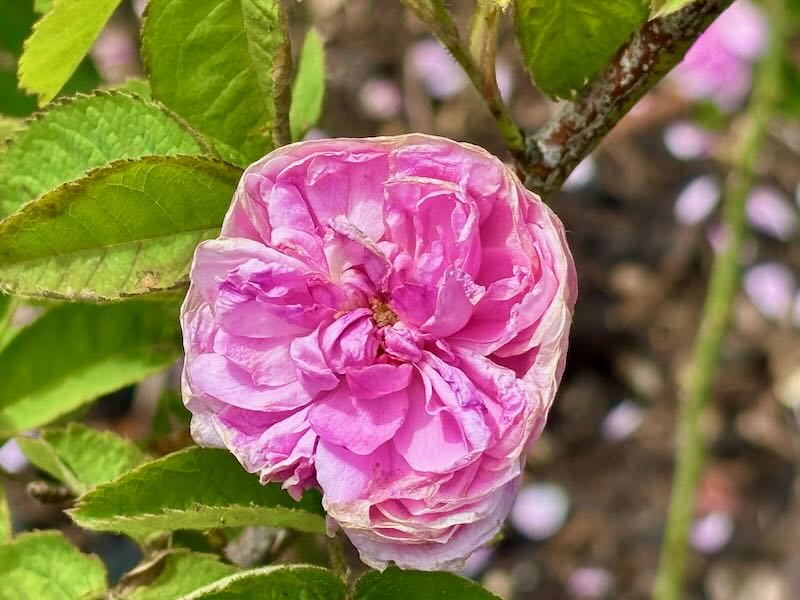
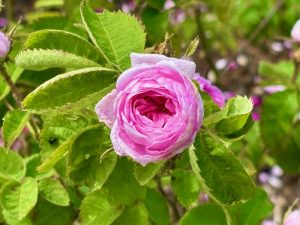
The blooms of Rosa ‘Petite de Hollande’ are small but perfectly formed. Each flower measures about 4 to 5 cm (1.5 to 2 in) across and appears in generous clusters that almost cover the plant at the height of the season. The petals are a clear rose-pink with a slightly deeper center, and as they age, they soften to a lighter shade of blush pink. When the buds first open, they are neatly cupped, forming rosettes that later flatten to reveal a delicate button eye at the center—a hallmark of many old roses.
The flowers exude a strong, sweet fragrance typical of Centifolia roses. This scent, rich and lingering, has often been described as the essence of a traditional rose garden. It carries warm, honeyed notes and a depth that modern hybrids rarely equal.
The foliage provides an ideal backdrop for the blooms. Leaves are mid-green, slightly glossy, and of medium size, giving the shrub a soft, full look even when not in flower. The stems are well-branched, forming a compact, rounded shape that rarely exceeds 1.2 m (4 ft) in height and spread.
Growth Habit and Seasonal Display
Unlike modern repeat-flowering roses, Rosa ‘Petite de Hollande’ blooms once a year, but the display it produces is both abundant and unforgettable. Its flowering season typically begins in June and continues into early July, depending on climate and location. For several weeks, the entire plant seems smothered in pink rosettes, their fragrance filling the air.
Although it flowers only once, this short performance is among the most rewarding in the rose garden. After blooming, the shrub maintains its appeal with tidy foliage and occasional small hips that turn red in autumn. The plant’s compact, bushy habit makes it perfect for smaller gardens or mixed borders, and it also performs well in large containers.
How to Grow Rosa ‘Petite de Hollande’
Light
Plant Rosa ‘Petite de Hollande’ in full sun to ensure the best flowering performance. It thrives when it receives at least six hours of direct sunlight each day. In hot climates, provide light afternoon shade to protect the petals and leaves from scorching. In cooler regions, a fully sunny position is ideal, helping to produce more vigorous growth and a denser display of blooms.
Soil
This rose prefers a fertile, humus-rich, and well-drained soil with a neutral to slightly acidic pH (around 6.0–7.0). Before planting, enrich the soil with well-rotted compost or aged manure. Good drainage is essential, as Centifolia roses dislike sitting in waterlogged ground. In heavy clay soil, improve conditions by mixing in coarse sand or grit along with organic matter to enhance both structure and drainage.
For sandy soils, increase water retention by adding compost or loam before planting. The goal is to achieve a soil that holds moisture without becoming compacted or soggy.
Watering
Provide deep, thorough watering two or three times per week during active growth, ensuring the moisture reaches the root zone. It’s better to water less frequently but deeply, rather than shallowly and often. Water at the base of the plant rather than overhead to keep the leaves dry and reduce the risk of fungal disease. During very hot or dry spells, increase watering frequency as needed. Once established, the rose can tolerate short dry periods but benefits from consistent moisture.
Fertilizing
Feed Rosa ‘Petite de Hollande’ in early spring as growth begins, using a balanced organic rose fertilizer or a slow-release shrub feed. A second, lighter application after flowering helps replenish nutrients the plant used during bloom. Mulching with well-rotted manure or compost around the base in spring will provide additional nutrition while helping retain soil moisture.
Avoid high-nitrogen fertilizers, which encourage leafy growth at the expense of flowers. A modest feeding routine keeps the shrub healthy and encourages concentrated energy toward blooming.
Mulching
Apply a 5–7 cm (2–3 in) layer of organic mulch such as shredded bark, compost, or leaf mold around the base of the shrub each spring. Keep the mulch a few centimeters away from the stems to prevent rot. Mulching not only conserves moisture but also helps maintain even soil temperature and suppress weeds.
Pruning Rosa ‘Petite de Hollande’
Prune Rosa ‘Petite de Hollande’ immediately after flowering, usually in midsummer. Since this rose blooms on old wood, pruning at the wrong time can remove next year’s flower buds. After the flowering season ends, remove spent blooms and thin out any dead or weak stems. Lightly shorten the flowering shoots to encourage strong new growth for the following year.
Every two or three years, remove one or two of the oldest canes at ground level to rejuvenate the plant and improve air circulation. Avoid hard pruning in late winter or early spring, as this will prevent flowering.
Propagation
This rose can be propagated from cuttings, although success requires patience. Softwood cuttings taken in early summer tend to root most readily. Choose healthy, non-flowering shoots about 12–15 cm (5–6 in) long, remove the lower leaves, and insert them into a mix of compost and sand. Keep them in a shaded, humid environment until roots form.
Hardwood cuttings can also be taken in late autumn. Cut sections about 20–25 cm (8–10 in) long, remove the soft tip, and plant them in a sheltered spot outdoors or in a cold frame. They will root slowly over winter and start new growth the following spring.
Pests and Diseases
Rosa ‘Petite de Hollande’ is a resilient old variety, but like most roses, it can occasionally encounter aphids, black spot, or powdery mildew. Encourage good air circulation by spacing plants properly and pruning crowded stems. Always water at the base rather than on the foliage to prevent moisture-related diseases.
If aphids appear, wash them off with a strong jet of water or use an insecticidal soap. For black spot or mildew, remove affected leaves promptly and apply an organic rose fungicide if needed. Healthy plants growing in rich, well-drained soil are naturally more resistant to pests and disease.
Seasonal Care for Rosa ‘Petite de Hollande’
In winter, this hardy shrub tolerates cold down to approximately –23°C (–10°F) in USDA zones 5–9. But in colder regions, mound soil or compost around the base of the plant in late autumn to protect the crown. In spring, remove the protective mound and refresh the mulch layer.
After flowering, reduce watering slightly and allow the new canes to harden before autumn. Avoid heavy feeding late in the season, as soft new growth may be damaged by frost.
Growing in Containers
Rosa ‘Petite de Hollande’ adapts beautifully to container cultivation, making it ideal for patios or small gardens. Choose a large pot at least 45 cm (18 in) deep and wide with ample drainage holes. Use a high-quality potting mix enriched with compost and perlite to ensure good drainage. Water when the top 2–3 cm (1 in) of soil feels dry. Feed monthly during spring and early summer with a diluted liquid fertilizer formulated for roses.
Repot every three to four years or when growth slows. Remove the top few centimeters of spent soil each spring and replace it with fresh compost and a small amount of slow-release fertilizer.
Design and Garden Use of Rosa ‘Petite de Hollande’
‘Petite de Hollande’ is a perfect choice for gardeners who want the romance of old roses in a smaller space. Its rounded habit and tidy size make it easy to fit into mixed borders, cottage gardens, or even formal parterres. The fragrant pink blooms combine beautifully with lavender, catmint (Nepeta), and salvia. Its restrained scale also suits courtyards and terraces, where its perfume can be appreciated up close.
For a historical garden or a collection of antique roses, Rosa ‘Petite de Hollande’ adds an authentic touch of eighteenth-century charm. The once-blooming habit makes it an excellent partner for perennials that continue flowering later in the season, ensuring ongoing color in the same border.
Final Thoughts
Though small in stature, Rosa ‘Petite de Hollande’ carries the grandeur of centuries of rose breeding. It embodies the grace of a bygone era, yet remains perfectly suited to today’s gardens. Plant it in a sunny, well-drained spot, feed it modestly, prune it carefully after bloom, and it will reward you with an unforgettable display each summer. Its delicate rosettes and rich fragrance remind us why Centifolia roses remain among the most cherished of all—the timeless scent and form of a true classic, preserved in miniature perfection.