Liriodendron tulipifera: The Majestic American Tulip Tree
The Liriodendron tulipifera, widely known as the American Tulip Tree, Tulip Poplar, or Yellow Poplar, is one of North America’s most impressive native trees. Belonging to the Magnoliaceae family, it stands as a symbol of grandeur and natural elegance. This fast-growing deciduous species dominates the eastern forests of the United States and is celebrated for its tall, straight trunk, tulip-shaped blossoms, and luminous yellow foliage in autumn. It serves not only as an ornamental treasure but also as an important timber and nectar source.
Background and Taxonomy
The Liriodendron tulipifera holds a distinguished place in botany and American culture. Native to the eastern United States, it ranges from southern Ontario and New England down to Florida and westward to Louisiana and Arkansas. It is the state tree of Indiana, Kentucky, and Tennessee — a recognition of its significance and majestic stature.
This species is one of only two in the Liriodendron genus, the other being Liriodendron chinense, native to China. Together, they bridge continents, illustrating the deep botanical connections between Asian and North American floras. Fossil records show that ancient relatives of tulip trees once thrived across the Northern Hemisphere, including Europe, before the Ice Age restricted their range.
The genus name Liriodendron translates to “lily tree,” derived from the Greek words leirion (lily) and dendron (tree). The species epithet tulipifera means “bearing tulips,” a nod to the distinctive cup-shaped flowers that resemble tulip blossoms.
Distinctive Features and Description of Liriodendron tulipifera
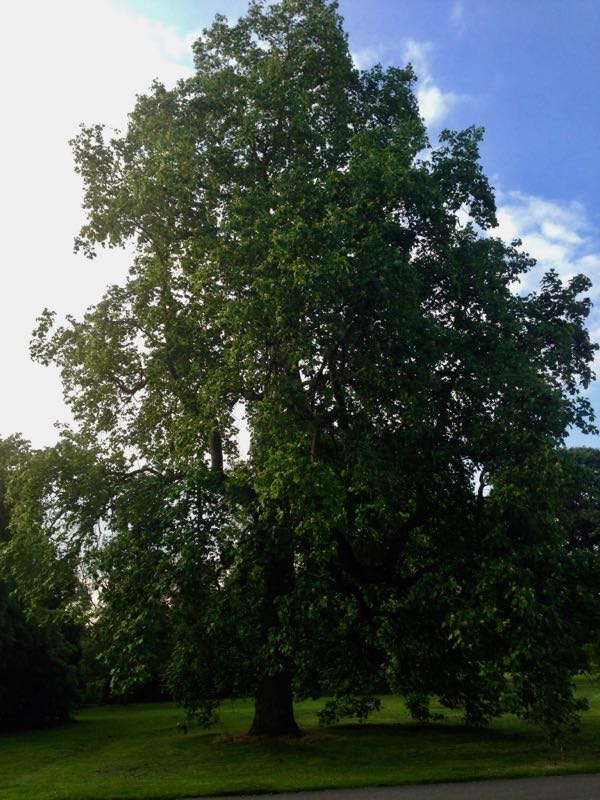
The American Tulip Tree is a fast-growing giant that can reach heights of 35 to 50 meters (115 to 165 feet) and occasionally even more under ideal forest conditions. In open landscapes, it forms a tall, straight trunk with a symmetrical crown. The bark starts smooth and gray in youth but matures into a furrowed, ridged texture with age, resembling the pattern of interlaced ropes.
Leaves and Foliage
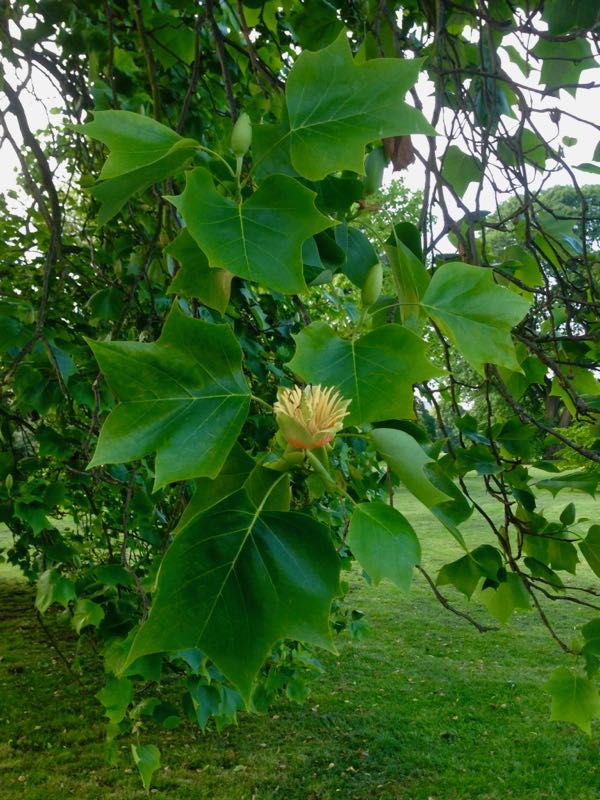
The leaves of Liriodendron tulipifera are easily recognizable — simple, alternate, and uniquely four-lobed, almost like a cat’s head or a violin silhouette. They measure 8–15 cm (3–6 inches) across and are bright green through summer. In autumn, the foliage turns a clear, glowing yellow, often lighting up entire groves and parklands. The leaves fall cleanly, leaving a tidy carpet of color beneath the tree.
Flowers
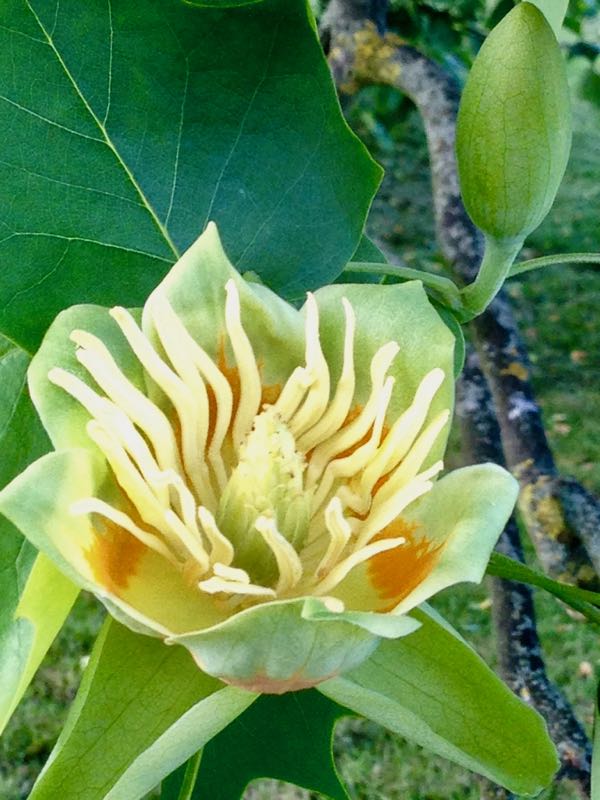
Flowering usually begins once the tree is around 15 years old. From late spring to early summer, Liriodendron tulipiferabursts into bloom with exquisite greenish-yellow flowers marked by a vivid orange band at the base of each petal. The blossoms are 4–5 cm (1.5–2 inches) wide and resemble tulips in shape — hence the name. Although the flowers appear high in the canopy and can be overlooked from the ground, their sweet nectar attracts bees, butterflies, and hummingbirds in abundance.
Each bloom lasts for several weeks, contributing to the tree’s ornamental appeal. In full sunlight, the flowers shimmer subtly against the large green leaves, creating a unique, luminous effect.
Fruit and Seeds
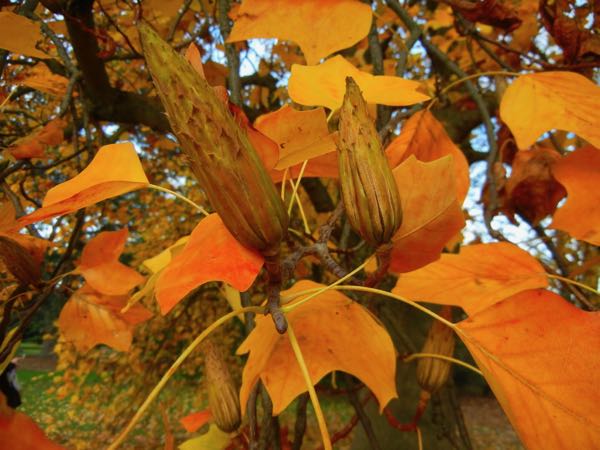
Following flowering, Liriodendron tulipifera produces cone-like clusters that mature into brown samaras by autumn. These fruits, technically aggregates of winged seeds, split open as they dry and are dispersed by wind. They often remain on the tree through winter, adding a rustic architectural interest to the bare branches.
Growth Habit and Longevity
This species grows rapidly, especially in its youth, averaging 60 cm (2 feet) or more per year under good conditions. Mature specimens may live 200–300 years, forming a commanding presence in old-growth forests. The wood is straight-grained, fine-textured, and relatively light, making it a valued timber used for furniture, cabinetry, and interior finishes.
Habitat and Natural Range
In its natural environment, the American Tulip Tree thrives in deep, rich, and well-drained soils. It favors moist, loamy conditions and often grows in valleys, floodplains, and lower mountain slopes. The tree’s natural distribution extends across eastern North America, from New England and southern Ontario to northern Florida and Louisiana. It is a dominant canopy species in mixed hardwood forests, often growing alongside oaks, hickories, and maples.
Because of its adaptability and tolerance of urban conditions, Liriodendron tulipifera has become a favored landscape tree in parks and large gardens worldwide. In Europe, it was introduced as early as the 17th century and continues to be appreciated for its stately form and seasonal beauty.
How to Grow Liriodendron tulipifera
Light
Plant Liriodendron tulipifera in full sun for the best growth and flowering. It can tolerate partial shade but develops a straighter trunk and fuller crown with at least six hours of direct light daily. Avoid deep shade, which leads to weaker growth and sparse blooms.
Soil
The American Tulip Tree thrives in fertile, well-drained, slightly acidic soil. A loamy mix enriched with organic matter is ideal. Avoid compacted or lime-rich soils. The tree dislikes prolonged waterlogging but appreciates consistent moisture, particularly during establishment.
If you garden in clay soil, loosen the planting area deeply and amend with compost and sand to improve aeration and drainage.
Watering
Water deeply and regularly during the first few years to establish a strong root system. Mature trees tolerate brief dry periods, but extended drought can cause leaf scorch or early leaf drop. As a guideline, give around 20–30 liters (5–8 gallons) per week during dry spells. Always water at the base rather than overhead to prevent mildew on leaves.
Fertilizing
Feed Liriodendron tulipifera once in early spring with a balanced slow-release fertilizer (such as 10-10-10) or organic compost. Mature trees in fertile soil need little additional feeding. Avoid excessive nitrogen, which can promote soft growth at the expense of flowers.
Mulching
Apply a 5–8 cm (2–3 inch) layer of organic mulch around the base each spring to conserve moisture and regulate soil temperature. Keep the mulch a few centimeters away from the trunk to prevent rot.
Pruning
Minimal pruning is needed. Prune in late winter or early spring before new growth begins. Remove dead, damaged, or crossing branches to maintain a clean structure. Avoid heavy pruning, as large wounds can heal slowly. When grown in open landscapes, Liriodendron tulipifera naturally forms a tall, straight trunk with evenly spaced branches — a hallmark of its majestic form.
Propagation of Liriodendron tulipifera
You can propagate Liriodendron tulipifera from seed or by grafting. Seeds should be collected in autumn after the samaras dry and turn brown. Sow them outdoors in fall or stratify in moist sand for 60–90 days at 4°C (40°F) before spring planting. Seedlings establish readily but may take 10–15 years to flower.
Grafting or budding is the preferred method for maintaining specific cultivars or desired characteristics, such as compact growth or disease resistance. This method also ensures faster flowering and predictable form.
Pests and Diseases
One of the advantages of growing Liriodendron tulipifera is its natural resistance to most pests and diseases. However, occasional issues may include:
- Aphids and scale insects: They may feed on young shoots, leaving sticky honeydew. Wash them off with water or treat with insecticidal soap.
- Verticillium wilt: A soil-borne fungus that can cause branch dieback. Avoid replanting tulip trees in infected soils.
- Leaf spot and mildew: These may appear during humid summers but rarely cause serious damage. Good air circulation and proper watering help prevent them.
Overall, this tree is considered hardy and low-maintenance once established.
Seasonal Highlights and Landscape Use
In spring, the tree’s lime-green buds swell into large, glossy leaves. By late May or June, the tulip-like flowers appear, often catching sunlight high above the ground. During summer, its dense canopy provides deep shade, making it ideal for large lawns or park settings.
In autumn, the tree transforms into a pillar of gold — its foliage glowing against the sky before falling cleanly. Even in winter, the silhouette of the tall trunk and upright seed cones adds a sculptural quality to the landscape.
Because of its size, Liriodendron tulipifera suits large gardens, estates, or public parks rather than small yards. It also works well in avenues or as a specimen tree in open lawns, where its form and color can be fully appreciated.
For gardeners seeking similar beauty in smaller spaces, consider cultivars like Liriodendron tulipifera ‘Arnold’ (a columnar form) or the hybrid Liriodendron chinense × tulipifera, which offers a compact habit.
Ecological and Cultural Value of Liriodendron tulipifera
The American Tulip Tree plays a vital ecological role. Its flowers provide nectar for bees, butterflies, and hummingbirds, while its seeds feed small mammals and birds such as finches and squirrels. The straight trunk offers nesting cavities for woodpeckers and owls.
Historically, Native Americans used the wood to carve canoes, taking advantage of its large size and smooth texture. Early settlers valued its straight grain for furniture, clapboards, and musical instruments. Today, it remains a key timber species in the eastern United States.
Culturally, Liriodendron tulipifera stands as a symbol of American heritage. Its combination of beauty, strength, and longevity embodies the resilience of North American forests. It continues to inspire artists, gardeners, and nature lovers alike.
Environmental Tolerances
This species performs best in USDA Zones 4–9. It tolerates brief flooding but struggles in prolonged drought or compacted soils. While it prefers mild to humid climates, it can adapt to cooler northern zones with protection from harsh winds.
Young trees are sensitive to transplant shock due to their long taproots, so it’s best to plant them when small and avoid frequent relocation. Once established, they become remarkably resilient, surviving strong winds and urban air pollution.
Conclusion
The Liriodendron tulipifera is a living monument of North American flora — tall, graceful, and deeply symbolic. From its tulip-shaped flowers to its golden autumn foliage, it commands admiration throughout the seasons. Its rapid growth, disease resistance, and ecological value make it a rewarding choice for gardeners with space to let it thrive.
Plant it where it can grow freely and rise proudly into the sky. In time, it will reward you with shade, beauty, and a legacy that lasts for generations.