Delphinium ‘Red Lark’: A Bold Splash of Coral in the Summer Border
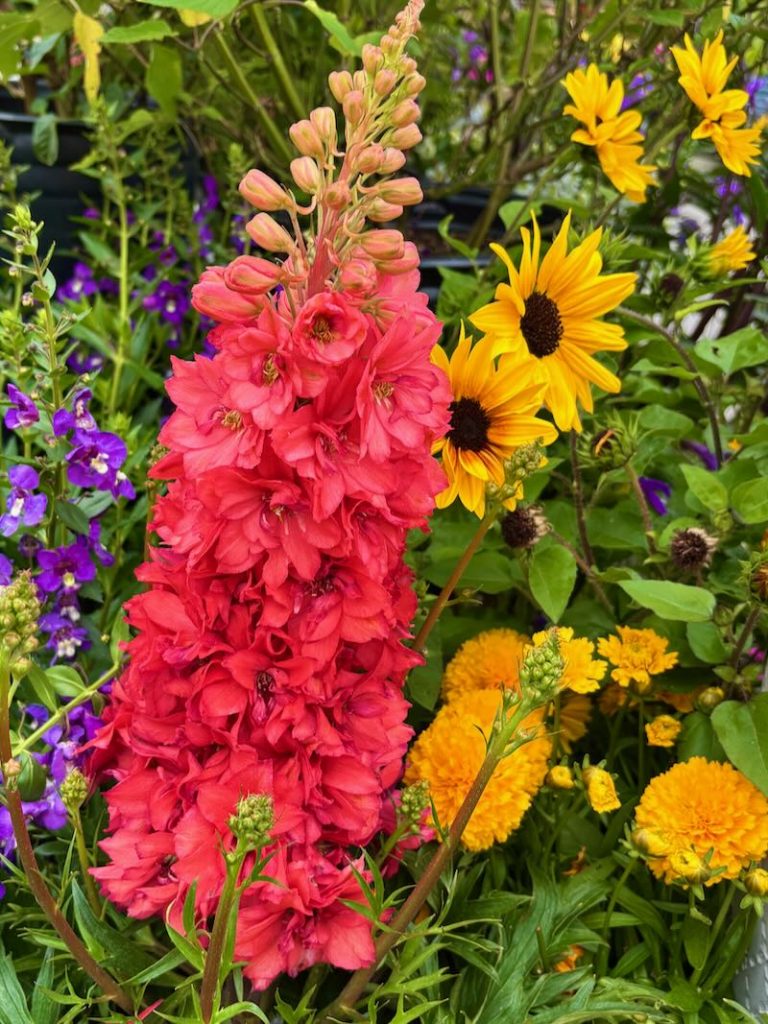
Delphinium ‘Red Lark’ is a head-turner. With coral-red, ruffled flowers and a neat, upright habit, this perennial adds both structure and color to any summer garden. Unlike traditional blues and purples common in its genus, ‘Red Lark’ breaks the mold with vibrant salmon-to-red shades rarely seen in Delphinium. Bred through tissue culture, it offers uniformity and vigor that seed-grown varieties often lack. This cultivar stands out not only for its striking color but also for its performance—sturdy stems, excellent branching, and exceptional value as a cut flower.
Belonging to the Ranunculaceae family, Delphinium ‘Red Lark’ thrives in climates with cool nights and long summers. It typically grows 75–90 cm tall (2.5–3 ft) with a spread of 45–60 cm (1.5–2 ft). Its compact form makes it suitable for small gardens or tighter borders, where taller delphiniums might overwhelm. The glossy, dark green foliage forms a dense, attractive base that showcases the vertical flower spikes to full effect. Blooming begins in early summer, often repeating in late summer or early fall with proper care.
The Unique Appeal of Delphinium ‘Red Lark’
Unlike the towering varieties of its kind, Delphinium ‘Red Lark’ offers a shorter, more manageable height without sacrificing bloom size or visual impact. Each flower spike bristles with layers of fully double blooms, hovering just above the foliage mound. The warm, coral-toned petals glow in the sunlight, making it a favorite among gardeners looking to expand beyond cool-colored perennials.
The flower color ranges from salmon-pink to a dusky coral-red, a rare hue in the Delphinium genus. In mixed borders, it pairs beautifully with blues, purples, silvers, and whites. It draws hummingbirds and butterflies while resisting deer and rabbits. These traits, combined with its durability and floral drama, make it an excellent focal point or mass planting choice for a variety of garden styles—from cottage to contemporary.
How to Grow Delphinium ‘Red Lark’
Light
Full sun brings out the best in Delphinium ‘Red Lark’, promoting stronger stems and more abundant flowering. In hotter climates or during heatwaves, part shade during the afternoon can help reduce stress and protect blooms from fading.
Soil
This cultivar prefers rich, well-drained soil. A slightly alkaline to neutral pH (7.0 or higher) supports healthy growth. If your soil tends toward acidity, incorporate lime prior to planting. Improve soil structure with compost or aged manure to boost fertility and drainage.
Watering
Water consistently to keep the soil evenly moist, especially during dry spells. Avoid overwatering or soggy soil, which can lead to crown rot. Mulch around the base to retain moisture while keeping the crown itself exposed to prevent rot.
Fertilizing
Delphinium ‘Red Lark’ is a heavy feeder. Use a balanced granular fertilizer in spring, supplemented with a high-potassium liquid feed as buds form. Too much nitrogen can result in lush foliage but fewer flowers. For container-grown specimens, fertilize every 2–3 weeks with a diluted formula during the growing season.
Support
Though more compact than traditional types, this cultivar still benefits from staking or garden supports, particularly in windy conditions. Install supports early in the season to avoid damaging maturing stems later on.
Deadheading and Reblooming
Once the initial bloom finishes, trim back the flower stalk to encourage a second flush later in the summer. Prompt deadheading also keeps the plant tidy and redirects energy into root and shoot development rather than seed production.
Winter Care
After frost has blackened the foliage, cut stems to ground level. Apply a winter mulch of straw or shredded bark in colder zones to protect the crown from freeze-thaw cycles. In zones 5–8, it typically overwinters well with minimal protection.
Propagation of Delphinium ‘Red Lark’
Because ‘Red Lark’ is a patented cultivar (PP29,761), propagation by division or basal cuttings is restricted without a license. However, in general, Delphinium hybrids are propagated in spring by basal cuttings taken when shoots are 7–10 cm (3–4 in) tall. For home gardeners, purchasing potted plants from licensed growers ensures you receive genetically stable, vigorous stock.
Pests and Diseases
While relatively trouble-free, Delphinium ‘Red Lark’ can face challenges, especially in humid or poorly ventilated conditions. Powdery mildew, botrytis, crown rot, and stem cankers may develop if air circulation is lacking. Preventive care includes spacing plants adequately, avoiding overhead watering, and removing any dead or diseased foliage promptly.
Insect pests include aphids, spider mites, leaf miners, thrips, and beetles. Aphids, especially green peach aphid (Myzus persicae), can distort new growth and spread disease. Insecticidal soap or neem oil can help manage light infestations. Always inspect new growth closely in spring and early summer.
Avoid wet soils and cold planting conditions to reduce risks of damping off or crown rot. When needed, a general-purpose fungicide may be applied during high-risk periods—especially when warm, wet weather coincides with bud development.
Seasonal Performance and Garden Use
Delphinium ‘Red Lark’ delivers bold summer color without the towering height that often makes delphiniums prone to breakage. With a medium growth rate and tidy habit, it suits borders, specimen plantings, and cutting gardens alike. Each stem is floriferous and long-lasting in a vase. The flowers also dry well for floral crafts.
In the garden, its red shades blend beautifully with ornamental grasses, white coneflowers, salvias, and silver-leaved plants. It contributes architectural structure without overwhelming neighboring plants. Plant several together for a dense, colorful display or place one near an entry path as a conversation-starting focal point.
Summary
With its unique color, compact size, and multiple seasons of bloom, Delphinium ‘Red Lark’ is a gem for modern perennial gardens. Easy to grow, resistant to pests and critters, and loved by pollinators, it’s a standout among its genus. Give it sun, good soil, and regular care, and it will reward you with coral spires that brighten up the summer months and keep your garden buzzing with life.