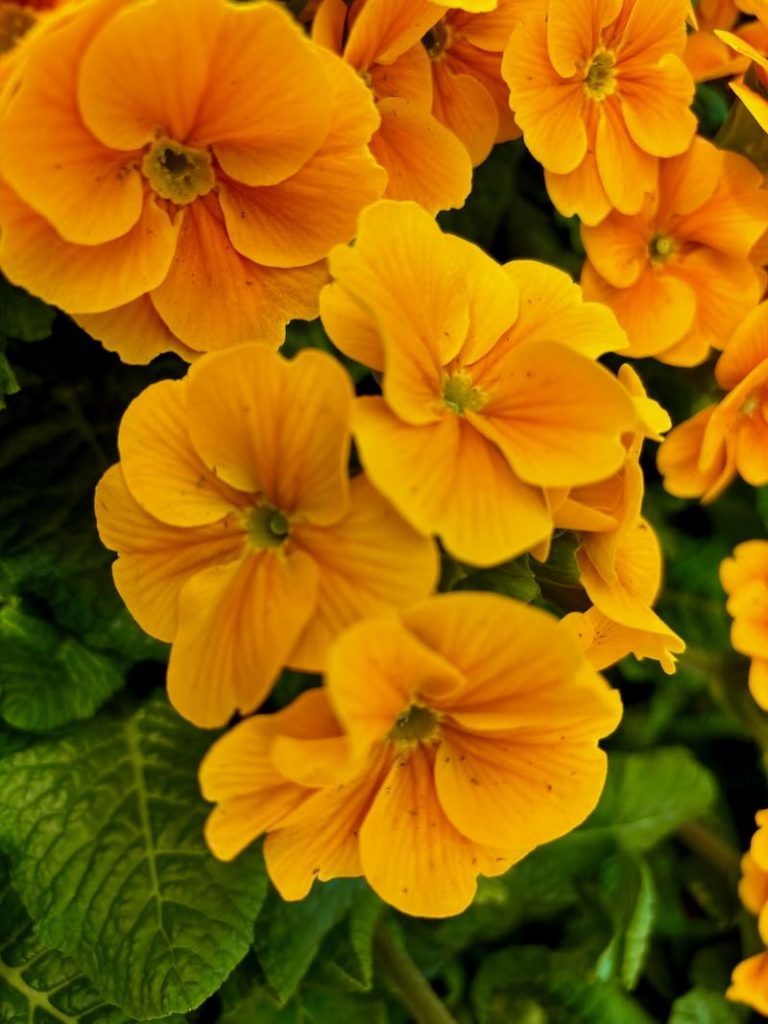

A Burst of Early Season Brilliance: Meet Primula polyanthus ‘Orange’
Primula polyanthus ‘Orange’ belongs to the Primulaceae family, a group known for lifting the mood of many a damp and chilly spring with charming clusters of flowers. They commonly call it Primrose Polyanthus Orange. This particular cultivar stands out for its unapologetically bold color, producing rounded flowerheads composed of multiple orange blossoms accented with fresh-looking green centers. When massed in beds or nestled into containers, they offer the kind of saturation usually reserved for midseason annuals, making them indispensable for gardeners craving early color.
The foliage forms a neat, dense rosette of dark green leaves, each slightly crinkled and edged with a soft, waxy texture that helps conserve moisture. These leafy mounds typically stay low, while the upright flower stalks elevate the blooms just above the foliage, usually reaching a tidy height of 15 centimeters (6 inches) and spreading out to around 15 centimeters (6 inches) wide.
The Glowing Personality of Primula polyanthus ‘Orange’
The garden world has a special affection for those plants that wake up before everything else. When the cold of winter finally starts to loosen its grip and gray skies give way to spring light, few sights feel as cheerful and promising as the vivid blooms of Primula Polyanthus ‘Orange’. With its glowing orange petals and lively lime-green eyes, this primrose variety transforms garden beds and containers into bright tapestries long before summer flowers stir.
A Long-Lasting Floral Encore
One of the reasons Primula polyanthus ‘Orange’ is so beloved is its prolonged bloom period. In most regions, flowering kicks off in late winter or early spring, sometimes as early as February, and with proper care, the display can last well into early summer. Deadheading spent blooms encourages fresh ones to form, allowing you to enjoy a near-constant wave of color.
Whether used to brighten up a front entry, weave through the edges of garden beds, or create welcoming container arrangements, this primrose variety keeps your landscape lively while many perennials are still waking from their winter slumber.
Best Locations for Planting
Choosing the right home for your Primula polyanthus ‘Orange’ will pay off in vibrant displays and healthy growth. While these plants are adaptable, they do have their preferences when it comes to light, soil, and spacing.
In cooler climates with mild summers, full sun is perfectly suitable and will help encourage the strongest flowering. However, in warmer zones, especially where summer temperatures rise above 29°C (85°F), partial shade is essential. Primulas naturally thrive under deciduous trees — in spring, they bask in full light before the tree canopy develops, and once the leaves unfurl, the primroses benefit from a protective layer of dappled shade during the warmer months.
Wherever you plant them, ensure the soil is consistently moist but never soggy. Good drainage is a must to avoid root rot, while rich, organic soil will provide the nutrients needed for their extended flowering season.
Timing Your Planting for Maximum Success
The timing for planting Primula polyanthus ‘Orange’ largely depends on your climate. In cold-weather zones, primroses are best planted in spring after the danger of frost has passed. This gives the young plants time to settle into the soil before the heat of summer arrives.
In regions with mild winters, the opposite strategy applies: plant your primroses in the fall or early winter. This allows them to establish roots while temperatures are still cool, setting the stage for a burst of blooms as soon as late winter arrives.
Whether planting new nursery transplants or divisions from an established clump, set your primulas in the ground so that the crown sits just above soil level. Space them around 15 to 30 centimeters (6 to 12 inches) apart to allow for air circulation and healthy growth.
The Right Soil for Happy Primulas
Soil preparation is one of the most important steps in ensuring your Primula polyanthus ‘Orange’ thrives. These plants are particularly fond of soils that are rich in organic material and capable of holding moisture without becoming waterlogged.
If your soil is heavy clay, it’s worth working in generous quantities of well-rotted compost or leaf mold to improve structure and drainage. For sandy soils, adding compost will help retain enough moisture to suit these thirsty plants.
When planting, it’s helpful to apply a 2.5 to 5 cm (1 to 2 inch) layer of mulch around the plants. This keeps the soil cool, prevents moisture loss, and suppresses competing weeds. Be sure to leave a gap around the crown itself to prevent rot.
Watering: The Lifeline of Primula polyanthus ‘Orange’
When it comes to watering, consistency is key. Primula polyanthus ‘Orange’ prefers evenly moist soil and will quickly show signs of stress if it swings too far in either direction. Wilting or yellowing leaves often signal underwatering, while mushy, blackened crowns point to overwatering or poor drainage.
In the absence of rainfall, aim to provide around 2.5 cm (1 inch) of water per week, especially during dry spells. Container-grown primroses may need water even more frequently, particularly when daytime temperatures begin to rise. During hot, dry periods, daily checks are a wise habit to adopt.
Fertilizing for a Bumper Crop of Blooms
While Primula polyanthus ‘Orange’ isn’t particularly hungry, it does appreciate a boost at key times of the year. Before planting, mix in some organic compost or a balanced slow-release fertilizer to give roots a strong start.
In early spring, apply a liquid fertilizer designed for flowering plants, preferably diluted to half the recommended strength. This encourages the plant to channel its energy into flower production. If you’re growing primulas in containers, feeding them monthly during the bloom period will help maintain a lush and lively display.
Deadheading and Pruning for Continuous Beauty
Like many flowering perennials, Primula polyanthus ‘Orange’ benefits from regular deadheading. Removing spent flower stalks not only tidies the plant but encourages it to keep producing new blooms rather than setting seed.
Use clean scissors or pruners to snip flower stems back to the base as soon as the flowers fade. This habit can dramatically extend the blooming period, particularly in climates where spring remains cool.
During the growing season, also watch for any leaves that show signs of disease or age — brown spots, wilted tips, or yellowing can indicate an issue. Removing affected leaves promptly keeps the plant healthy and attractive.
Propagation: Expanding Your Collection
If you’d like to add more of these glowing gems to your garden, propagation is delightfully straightforward. The simplest method is division, which can be done immediately after flowering in spring or in early autumn.
Dig up the clump, gently tease apart the individual crowns, and replant them at the same depth they were previously growing, spacing them 15 to 30 centimeters (6 to 12 inches) apart. Water them well after replanting and keep the soil moist while the roots settle in.
Seed propagation is another option for non-patented varieties, though the seedlings might differ slightly from the parent plant. If you’re growing from seed, sow them in trays filled with fine, moist compost and provide light but not direct sun until germination occurs.
Winter Protection for Tender Growth of Primula polyanthus ‘Orange’
Primula polyanthus ‘Orange’ is hardy across USDA Zones 4 to 7, meaning it can withstand significant winter chill. However, where snow cover is unreliable, it’s wise to add an insulating mulch layer once the ground begins to freeze. A blanket of straw, shredded leaves, or evergreen boughs will shield the crowns from damaging freeze-thaw cycles.
Come spring, remove the mulch before the new foliage starts pushing through. If an unexpected frost threatens, cover the emerging leaves overnight with horticultural fleece or an inverted flowerpot to prevent cold injury.
Common Pests and Troubles
Though generally resilient, Primula polyanthus ‘Orange’ is not entirely free from garden nuisances. Slugs and snails are fond of the soft, fleshy leaves, particularly in wet weather. Beer traps, copper tape, or organic slug pellets can help reduce their numbers.
Aphids occasionally gather on the flower stems or undersides of leaves, sucking sap and distorting growth. A sharp spray of water or treatment with insecticidal soap usually keeps them under control.
Spider mites may appear in dry, dusty conditions — a situation best avoided by maintaining adequate humidity around your plants. Leaf spot, a fungal issue, can occur if the foliage remains wet for extended periods. Good air circulation and careful watering habits minimize this risk.
Bringing Primula polyanthus ‘Orange’ Indoors: Short-Lived Charm
In early spring, primroses often appear in garden centers as potted houseplants. While undeniably charming, these forced blooms tend to be short-lived indoors. Primula Polyanthus ‘Orange’ craves cool nights around 10 to 15°C (50 to 60°F)and bright, indirect light.
After their indoor bloom cycle finishes, these plants fare much better when transitioned outdoors, either planted directly into the garden or kept in containers on shaded patios. Left in indoor conditions too long, especially in centrally heated homes, they will struggle to survive beyond a single season.
A Garden Classic That Never Fades
Whether planted en masse along a woodland path, tucked into mixed containers, or nestled under the dappled shade of a tree, Primula Polyanthus ‘Orange’ never fails to light up its surroundings with its sunset-hued blooms.
For gardeners who dream of a landscape that comes alive while others are still waiting for the snow to melt, this cheerful primrose offers months of beauty, minimal fuss, and the uplifting reminder that winter never lasts forever.
If you’re searching for the perfect plant to bridge the gap between winter’s quiet and spring’s explosion, look no further — Primula Polyanthus ‘Orange’ will ensure your garden awakens in style.