Rosa ‘Passionate Kisses®’: A Modern Romance in the Garden
Rosa ‘Passionate Kisses®’, also known as Rosa ‘Meizebul’, is a modern floribunda rose from the Bloomables® collection that delivers romantic charm with resilient garden performance. Bred by the renowned House of Meilland® and introduced in 1998, this salmon-pink beauty embodies the spirit of contemporary rose breeding—graceful, generous, and easy to grow. Whether placed in a formal border, cottage garden, or as a striking hedge, Passionate Kisses® lives up to its name, offering lush, consistent blooms from early spring to frost.
This vigorous, bushy shrub rose is part of the Rosaceae family and has quickly won favor among gardeners and landscapers for its long flowering season, disease resistance, and elegant form. Its ability to bloom from head to toe sets it apart from many traditional varieties, giving your garden a continuous flush of color and texture.
Passionate Kisses Rose Overview
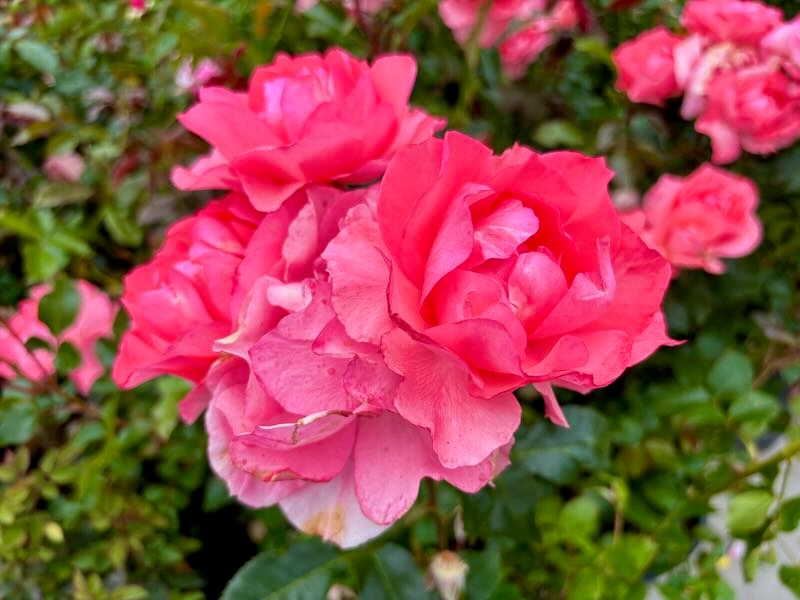
With a height and width of 90 to 120 cm (3 to 4 feet), Rosa ‘Passionate Kisses®’ or Rosa ‘Meizebul’ maintains a dense, upright, rounded habit. Its medium-sized, salmon-pink flowers are arranged in loose clusters that emerge continuously throughout the season. Each bloom is semi-double, roughly 9 cm (3.5 inches) in diameter, with a soft fragrance and a distinctive pink reverse that catches the light and the eye. The petals often carry coral or apricot undertones, creating a warm glow that softens the mood of any planting scheme.
Its dark green, semi-glossy foliage forms a full skirt around the plant, reaching to the base—eliminating the need for groundcover around its feet. This full, leafy habit makes it a superb choice for mass planting, low hedges, or as a border feature in mixed beds.
How to Grow Rosa ‘Passionate Kisses®’
Light
Passionate Kisses® performs best in full sun. A minimum of six hours of direct sunlight daily is required for optimal blooming. Morning sun is especially important to dry leaves quickly and prevent fungal diseases. While it tolerates some light afternoon shade, flowers will be fewer and less vibrant in low light.
Soil
This rose prefers fertile, well-drained soil that retains moisture without becoming soggy. A loamy or sandy loam enriched with organic matter provides the perfect foundation. Ideal pH levels range from slightly acidic to neutral (5.5 to 7.0). Avoid planting in heavy clay or poor-draining soils unless amended with compost and grit to improve structure.
Watering
During the first year after planting, water deeply and consistently to encourage strong root development. Once established, Rosa ‘Passionate Kisses®’ is moderately drought tolerant but performs best with consistent moisture, especially in dry spells. Water at the base to avoid wetting foliage, which can lead to fungal problems. Mulching with 5 to 7.5 cm (2 to 3 inches) of organic mulch helps retain moisture and suppress weeds.
Fertilizing
Feed roses regularly during the growing season to support strong growth and abundant blooms. Begin in early spring when new growth appears, using a balanced slow-release fertilizer or rose-specific granular blend. Supplement with a water-soluble fertilizer every 4–6 weeks during the bloom period, ceasing by late summer to allow the plant to prepare for dormancy.
Pruning
Since Passionate Kisses® blooms on new wood, prune in late winter or very early spring once the threat of severe cold has passed. Remove dead or diseased wood, cut back to healthy outward-facing buds, and shape the plant to maintain its form. Light deadheading during the season encourages repeat blooming, although many flowers drop cleanly on their own.
Propagation of Rosa ‘Passionate Kisses®’
This rose is best propagated through semi-hardwood or hardwood stem cuttings. Take 10 to 15 cm (4 to 6 inch) cuttings in late summer or early fall and root them in a moist, sterile propagation mix. Ensure high humidity with a plastic dome or misting system, and place in a warm, bright location out of direct sun. Rooting hormone will increase success rates. Note that propagation may be restricted due to plant patent laws.
Pests and Diseases
Rosa ‘Passionate Kisses®’ or Rosa ‘Meizebul’ is generally disease-resistant when grown in appropriate conditions, but it’s still susceptible to common rose pests:
- Aphids – These sap-sucking insects are often found on new growth. Minor infestations can be handled with a strong spray of water or insecticidal soap.
- Rose slugs (sawfly larvae) – Chew through leaves, leaving a skeletonized appearance.
- Japanese beetles and rose weevils – Feed on leaves and flowers, requiring handpicking or targeted treatments.
- Leafcutter bees – Beneficial pollinators that may take circular notches from leaves.
- Deer – Will browse roses if other food is scarce.
To reduce disease pressure, practice good air circulation, water at the base, and clean up fallen debris in fall. Avoid overhead irrigation and consider preventive fungicides in areas prone to black spot or mildew.
Rosa ‘Passionate Kisses®’ in the Landscape
Few roses combine romantic charm with practical garden performance like Passionate Kisses®. It works beautifully:
- As a specimen surrounded by perennials like salvia, lavender, or nepeta.
- In a hedge or mass planting, offering season-long structure and color.
- As an accent in a mixed border, especially against dark-leaved companions like Heuchera or purple-leaved barberry.
- In containers, where its tidy habit and non-stop blooms bring elegance to patios or entryways.
The salmon-pink hue is soft enough to blend with pastel schemes yet vibrant enough to stand alone as a focal point.
Companion Plants for Passionate Kisses® Rose
To create an eye-catching garden design, consider pairing this rose with:
- Nepeta (Catmint) – Soft lavender-blue flowers create a cool contrast.
- Salvia nemorosa – Adds vertical form and pollinator appeal.
- Lamb’s Ear (Stachys byzantina) – Silvery foliage highlights the coral-pink tones.
- Lady’s Mantle (Alchemilla mollis) – Chartreuse flowers complement the rose’s warm colors.
- Gaura lindheimeri – Airy, white-to-pink blooms offer a whimsical backdrop.
Wildlife and Pollinator Value
Rosa ‘Passionate Kisses®’ is attractive to bees and other pollinators thanks to its accessible semi-double flowers. The rose’s long blooming season makes it a valuable source of nectar well into fall.
Final Thoughts on Rosa ‘Passionate Kisses®’ or Rosa ‘Meizebul’
More than just a pretty name, Passionate Kisses® is a thoroughly modern rose that offers romance without the maintenance headache. Its showy salmon-pink flowers, healthy foliage, and compact form make it suitable for gardens large and small. Whether you’re a new rose grower or a collector of Meilland® classics, this floribunda offers the perfect blend of charm and durability.
With lineage connected to legendary roses like Peace, Bonica®, and Eden Climber®, Rosa ‘Passionate Kisses®’ carries the torch of breeding excellence forward. And like all great romances, it’s one you’ll want to revisit every season.