The Garden of Europe in Bloom
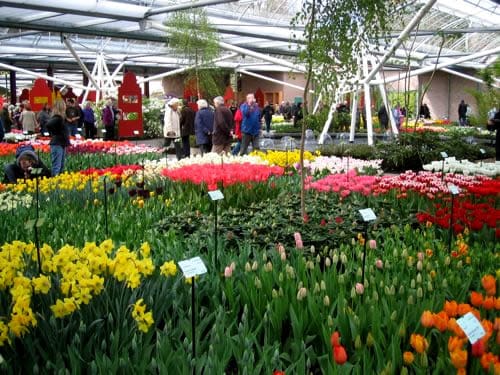
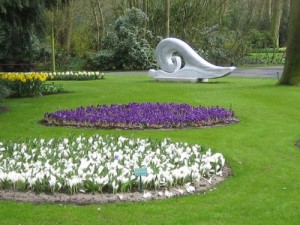
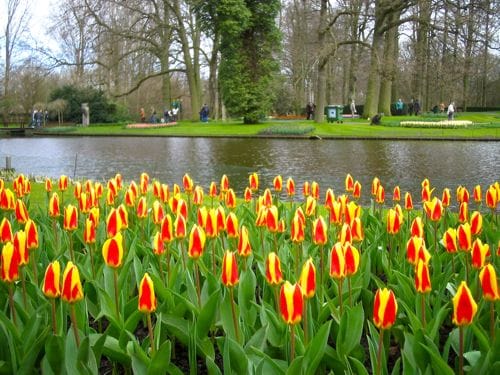
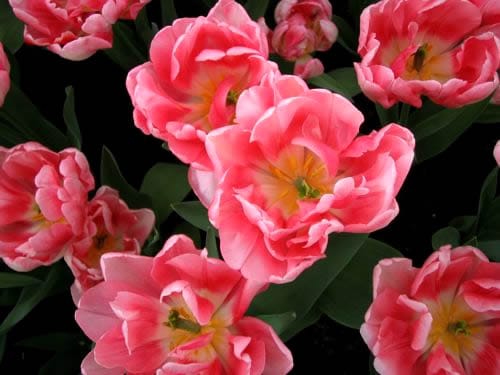
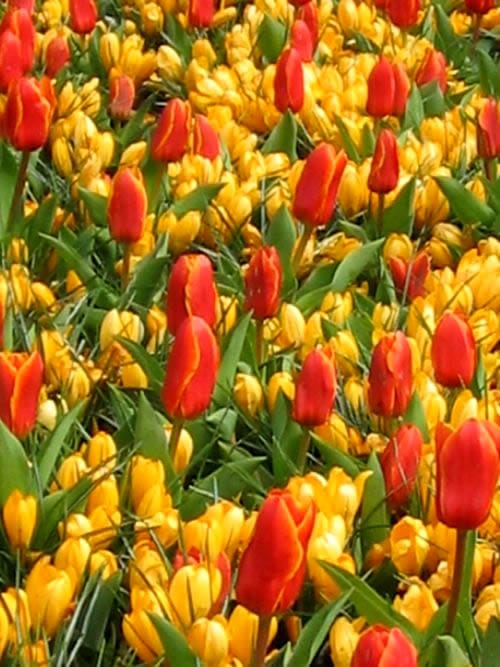
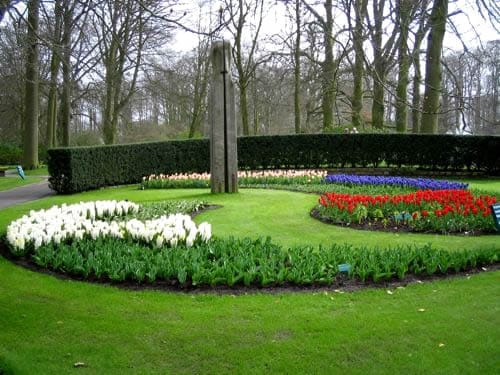
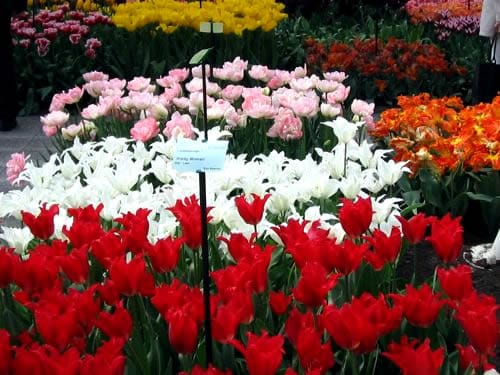
Keukenhof is one of the largest and most celebrated flower gardens in the world, located in the town of Lisse in the Netherlands. Often called the “Garden of Europe,” this extraordinary spring park spans nearly 32 hectares (79 acres) and features more than seven million flower bulbs planted each year. Every spring, It transforms into a sweeping landscape of color, texture, and fragrance. Visitors experience vast plantings of tulips, daffodils, hyacinths, crocuses, muscari, and ornamental alliums arranged in artistic drifts across lawns and winding pathways.
This seasonal display offers more than simple beauty. Keukenhof demonstrates advanced planting techniques used by professional growers to create continuous bloom. Early-flowering bulbs begin the season in March. Mid-season tulips dominate in April. Late-flowering varieties and companion plantings extend the display well into May. As a result, the garden maintains visual interest throughout the spring season rather than producing a single short bloom period.
History and Development of Keukenhof
The name Keukenhof translates to “Kitchen Garden,” reflecting the estate’s original purpose. During the 15th century, the land served as the kitchen garden for Countess Jacoba of Bavaria (Jacoba van Beieren). Herbs, fruits, and vegetables grown here supplied nearby noble households. The grounds originally formed part of the hunting lands surrounding Teylingen Castle, known in Dutch as Slot Teylingen. Only ruins of this castle remain today. The structure dates back to the 13th century and suffered severe damage during the Eighty Years’ War before burning again in 1675.
In 1638, the estate was purchased by Adriaen Maertensz Block, a Dutch merchant and shipowner. He built a large manor house and named it Keukenhof. This marked the beginning of the estate’s transition from agricultural land to ornamental landscape.
In the 19th century, Baron and Baroness Van Pallandt inherited the property and commissioned landscape architect Jan David Zocher and his son Louis Paul Zocher to redesign the grounds. The Zochers introduced sweeping lawns, curving pathways, and naturalistic planting patterns inspired by English landscape design. These structural elements still define the layout of the park today.
However, as it is known today was established much later. In 1949, a group of Dutch bulb growers and flower exporters created the modern park as a living exhibition space. Their goal was to showcase the diversity and quality of Dutch bulb cultivation in a landscape setting rather than a trade hall. The park opened to visitors in 1950 and immediately attracted international attention.
Seasonal Planting and Garden Design
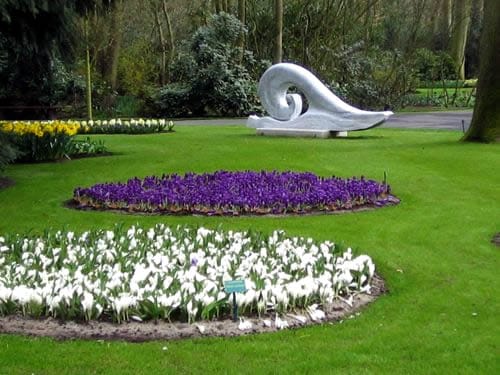
Each year, approximately 40 professional gardeners plant millions of bulbs throughout the park. Growers from across the Netherlands donate these bulbs annually. Designers arrange them in layered combinations to ensure long-lasting displays. For example, early crocuses or narcissi are planted above late-season tulips within the same bed. As the earlier flowers fade, the later varieties emerge and replace them visually.
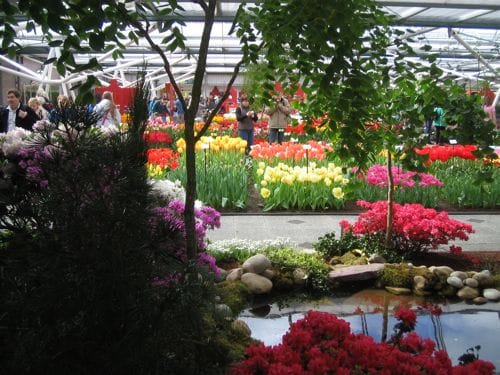
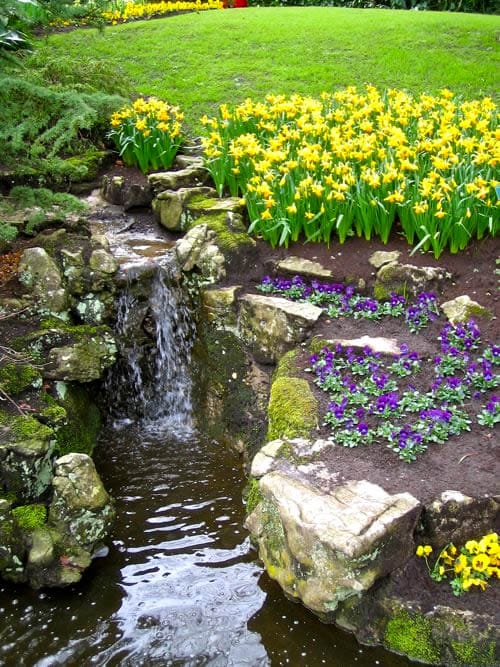
In addition to bulb displays, Keukenhof features themed landscape gardens such as an English garden, a Japanese-inspired garden, woodland plantings, and formal water features. These areas demonstrate how bulbous plants can integrate into different garden styles. Pavilions located throughout the grounds host rotating exhibitions of orchids, lilies, amaryllis, and other greenhouse-grown plants. These indoor displays complement the outdoor plantings and provide inspiration for gardeners working in smaller spaces.
Keukenhof also serves as an educational resource for landscape designers and horticulturists. The park demonstrates practical planting combinations, color harmonies, and spacing strategies that home gardeners can replicate. Visitors often observe how contrasting foliage textures enhance the appearance of tulips and how companion perennials extend seasonal interest beyond spring.
Visiting Keukenhof and Its Global Influence
Today, Keukenhof attracts more than 1.5 million visitors annually from around the world. Despite its international prominence, the park operates without direct government funding. Revenue from ticket sales supports maintenance, seasonal planting, and park operations. This self-sustaining model reflects the collaboration between Dutch horticultural industries and the charitable organization that manages the garden.
Beyond tourism, Keukenhof plays an important role in promoting sustainable horticulture and innovative planting techniques. Many of the bulbs displayed represent newly developed cultivars introduced by growers. As a result, the park acts as a global stage for emerging varieties and landscape trends.
Keukenhof stands not only as a breathtaking spring destination but also as a testament to centuries of landscape evolution, horticultural innovation, and cultural heritage. For gardeners and plant enthusiasts, it remains one of the most inspiring floral displays in the world and a valuable reference for designing dynamic seasonal plantings.
How to Get to Keukenhof
Keukenhof is located between Amsterdam and The Hague in the famous Dutch Bulb Region. Major highways and local roads clearly mark the route to the park, so visitors can reach it easily by car or public transport.
Stationsweg 166a
2161 AM Lisse
The Netherlands
Telephone: +31 (0) 252 465 555
Getting to Keukenhof by Car
From Apeldoorn, take the A1 toward Amsterdam. Then follow the signs for Schiphol and continue onto the A4 toward The Hague. Take exit 4 and follow the N207 toward Lisse. Once you arrive in Lisse, follow the signs marked “Keukenhof.”
From Utrecht, take the A2 toward Amsterdam and then join the A4 toward The Hague. On the A4, take exit 4 and follow the N207 toward Lisse. In Lisse, follow the signs marked “Keukenhof.”
From Rotterdam, follow the A4 toward The Hague–Amsterdam. Take exit 4 and follow the N207 toward Lisse. In Lisse, follow the signs marked “Keukenhof.”
From The Hague, take the A44 and use exit 3 for Noordwijkerhout/Lisse. Then take the N208 toward Lisse and follow the signs marked “Keukenhof.”
It is often best to switch off satellite navigation when approaching the park and follow the dedicated Keukenhof traffic signs for smoother access.
Wheelchairs are available for visitors who need assistance. You can borrow one at the park entrance.
Parking at Keukenhof
Keukenhof provides on-site parking for passenger vehicles. Directional signs clearly indicate both parking areas as you approach the park.
Separate parking is available for buses at the P-Hoofd lot. Bus parking is free of charge.
Bicycle racks are also available at both parking areas for visitors arriving by bike.
Public Transport to Keukenhof
Public transport offers an environmentally friendly way to visit Keukenhof. The Connexxion bus company operates several direct routes to the park from major cities and transport hubs such as Schiphol Airport, The Hague, and Leiden.
The easiest option is the Connexxion Combi Ticket. This all-in-one ticket includes a return bus journey to Keukenhof along with park admission. With a valid Combi Ticket, you can enter Keukenhof directly upon arrival. This option helps you avoid traffic delays, parking issues, and ticket queues at the entrance.
Coming from Amsterdam City Center
From the Leidseplein or Museumplein area, take the red Sternet Bus 197 to Schiphol Airport. Buses run five to six times per hour. At Schiphol, transfer to Keukenhof Bus 58 for direct access to the park.
You can purchase Combi Tickets at the Tourist Information desks located at Amsterdam Central Station and Leidseplein. These tickets include both transportation and park entry. Prices are approximately €25 for adults, €18 for visitors aged 65 and over, and €11 for children between 4 and 11 years old.
From Schiphol Airport
Bus 58 operates four times per hour on weekdays and up to eight times per hour on weekends. It departs from platforms B1 or B3 at the Schiphol Plaza bus station. The journey to Keukenhof takes about 35 minutes.
The last return bus to Schiphol leaves Keukenhof at approximately 19:22. International trains from cities such as Paris, Berlin, and Brussels also stop at Schiphol Airport, making it a convenient connection point for visitors arriving from abroad.
From Leiden Central Station
Bus 54 runs four times per hour during weekdays and up to eight times per hour on weekends. It departs from platform 1 on the city-center side of Leiden Central Station. The journey to Keukenhof takes about 25 minutes.
The last return bus to Leiden Central Station leaves at approximately 19:51.
From The Hague Central Station
Bus 89 operates on weekdays and departs every 30 minutes from The Hague Central Station. Travel time to Keukenhof is approximately 50 minutes.
Visiting Keukenhof by Bicycle
Visitors arriving by bicycle can use the designated racks located at both parking areas near the park entrances. Cycling is also a popular way to explore the surrounding Bulb Region.
Many visitors choose to rent a bicycle at Keukenhof and enjoy a scenic ride through the colorful tulip fields that bloom across the Dutch countryside during spring.