Wisteria floribunda ‘Alba’: A Cascade of Fragrant White Blooms
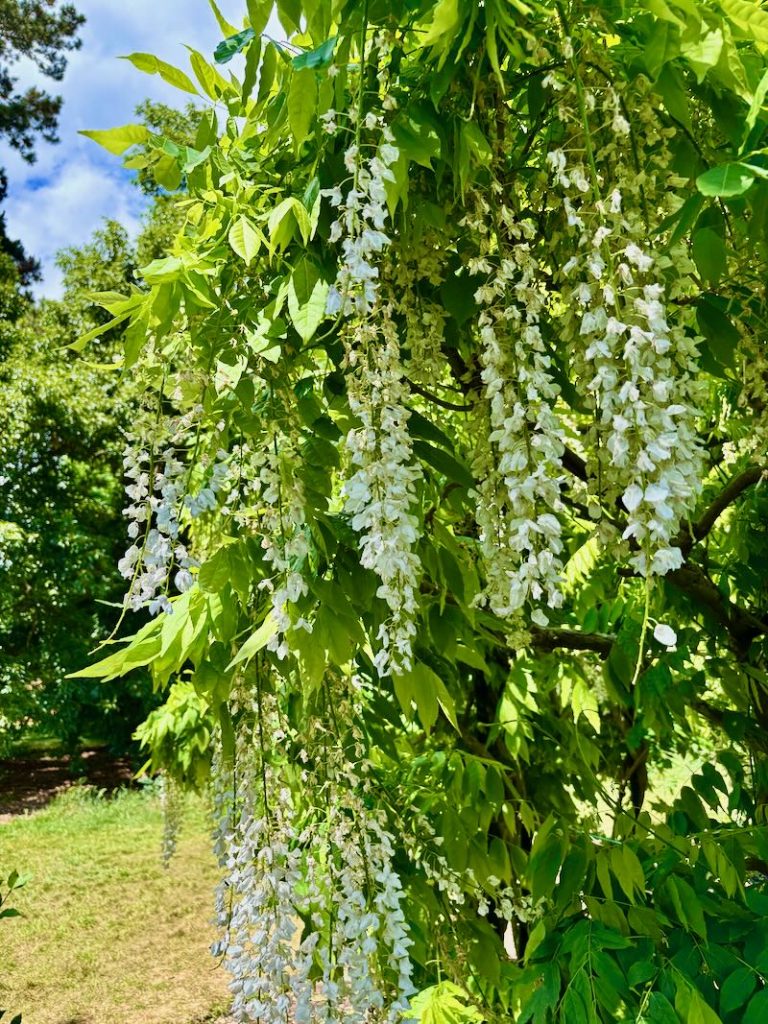
Wisteria floribunda ‘Alba’, known as white Japanese Wisteria, is one of the most elegant and sought-after flowering vines for the garden. Its graceful, cascading clusters of pure white, pea-like flowers hang in long racemes that can reach up to 60 cm (24 inches) in length. The blossoms are richly fragrant and appear in late spring to early summer, blooming as the foliage unfurls. This vine is famously seen draping over the Japanese Bridge in Claude Monet’s garden in Giverny, France, where it creates a scene of ethereal beauty.
A member of the Fabaceae (Legume) family, Wisteria floribunda is native to Japan and shares its family ties with peas, beans, and other nitrogen-fixing plants. Like its relatives, it helps enrich the soil. But unlike smaller members of its family, it grows into a commanding presence, combining beauty with strength. This species climbs vigorously by twining stems and can live for decades when properly sited and cared for.
Flowering Display and Growth Habit
The defining feature of Wisteria floribunda ‘Alba’ is its breathtaking floral display. The racemes open from base to tip, creating a waterfall effect as blooms emerge in succession. Flowering begins in late spring and may continue into early summer. Although ‘Alba’ is not a repeat-blooming cultivar, its single flowering season is dramatic and worth the wait.
When in bloom, the fragrance fills the air—sweet, floral, and intoxicating—making it a favorite of pollinators like bees and butterflies. Hummingbirds are also drawn to its nectar-rich flowers. Once the flowering ends, velvety, bean-like pods form and often remain into winter, adding seasonal interest.
This deciduous vine can reach up to 9 m (30 ft) in height and spread as wide as 6 m (20 ft). Its twining stems grow clockwise and quickly wrap around anything within reach. Light green, pinnate leaves emerge as the blooms fade and turn buttery yellow in fall, providing a second season of color. The foliage is dense and lush, offering excellent coverage for walls, fences, pergolas, or arbors.
How to Grow Wisteria floribunda ‘Alba’
Light
For optimal flowering, plant Wisteria floribunda ‘Alba’ in full sun. It needs at least 6 hours of direct light per day. While it can tolerate partial shade, especially in hotter climates, fewer blooms should be expected in less sun.
Soil
This vine prefers moist, fertile, and well-drained soil. A slightly acidic pH between 6.0 and 7.0 is ideal. Although tolerant of many soil types, including clay, it dislikes poor drainage. Amend heavy soil with compost or well-rotted manure before planting. Once established, it becomes more adaptable to soil conditions.
Watering
Young plants need regular watering to establish deep roots—about 2.5 cm (1 inch) of water per week. Established vines are drought-tolerant but benefit from deep, infrequent watering during extended dry spells. Allow the top 1–2 inches (2.5–5 cm) of soil to dry out between waterings.
Fertilizing
Avoid high-nitrogen fertilizers, which promote leaf growth at the expense of flowers. In early spring, apply a low-nitrogen, high-phosphorus fertilizer such as 5-10-10 to encourage blooming. In poor soils, a second feeding after flowering can boost vigor, but mature vines often need no supplemental feeding if well mulched.
Pruning
Pruning is essential for controlling growth and promoting flowering. Prune twice a year:
- Summer (July or August): Cut back new shoots to 5–6 leaves to direct energy into flower bud formation.
- Winter (January or February): Shorten those same shoots to 2–3 buds from the base. This keeps the plant tidy and maximizes bloom potential.
Remove any suckers at the base and cut out dead or crossing branches to improve structure and airflow.
Support
This vigorous vine needs a strong, permanent support. Use steel, heavy wood, or reinforced fencing. Wisteria floribunda‘Alba’ is heavy and will eventually damage lightweight structures. Suitable options include pergolas, house walls with trellis systems, or arbors. Avoid planting near gutters or eaves, which can be distorted or clogged by the vine’s twining stems.
To train Wisteria on a structure:
- Tie the main stem loosely to a vertical post.
- Direct side shoots along horizontal wires or rails.
- As the vine thickens, remove ties to prevent girdling.
Container Growing
Although large, ‘Alba’ can be grown in a large container as a free-standing standard. Use a robust stake or frame and prune regularly to maintain shape. Repot every few years to refresh soil and manage root size.
Pests and Diseases
Wisteria floribunda ‘Alba’ is generally pest-resistant, though aphids, scale insects, or caterpillars may occasionally appear. Leaf spot and powdery mildew can occur in humid or overcrowded conditions. Good spacing and airflow usually prevent these issues. Neem oil or insecticidal soap can control most pests organically.
The vine is resistant to deer and rabbits, making it suitable for woodland edge or rural gardens.
Toxicity
All parts of the plant are toxic if ingested, especially the seeds and seed pods. Keep children and pets away from the vine. The toxins can cause nausea, vomiting, and more severe reactions if large quantities are consumed.
Propagation of Wisteria floribunda ‘Alba’
Wisteria floribunda ‘Alba’ can be propagated by:
- Layering: Bend a flexible stem to the ground, cover a portion with soil, and wait for roots to form before cutting it from the parent plant.
- Cuttings: Take softwood cuttings in spring or hardwood cuttings in winter.
- Grafting or Budding: Commercial plants are often grafted for quicker blooming and more reliable flowering.
Note that seed-grown plants can take 10–20 years to flower and may not remain true to type. Always purchase grafted or cutting-grown specimens if you want reliable blooms.
Hardiness and Longevity
This Japanese wisteria is hardy in USDA zones 5 through 9. In colder zones, protect young plants in winter with mulch around the base and wind shielding. Once established, it is extremely cold-tolerant and can live for decades—some specimens over 100 years old still bloom each spring.
Landscape Uses of Wisteria floribunda ‘Alba’
Use Wisteria floribunda ‘Alba’ to cover large vertical spaces or to define outdoor rooms. Its elegant white blooms shine over pergolas, patios, and entryways. Train it along a fence for a springtime privacy screen, or let it scramble up a tree for a romantic, naturalized effect.
The vine pairs beautifully with spring bulbs, clematis, or climbing roses. In a formal garden, it lends architectural weight. In a cottage garden, it adds timeless beauty.