Helianthemum ‘Golden Queen’: A Radiant Carpet of Color
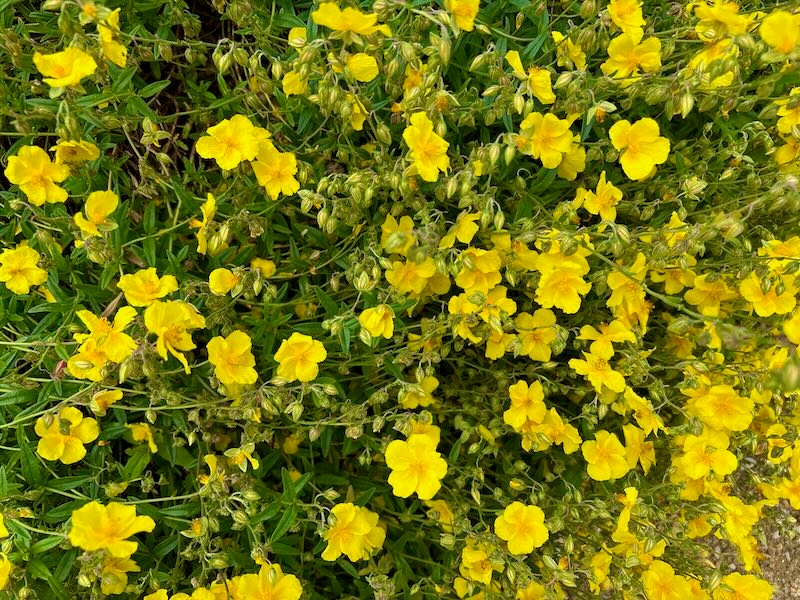
Helianthemum ‘Golden Queen’, commonly known as Rock Rose ‘Golden Queen’, is a low-growing, mat-forming evergreen subshrub that brings a burst of sunshine to dry, rocky landscapes. A member of the Cistaceae family, this resilient plant forms a neat mound of glossy, grey-green foliage topped with a cheerful display of golden-yellow, five-petaled flowers from late spring into summer.
Botanical Background of Helianthemum ‘Golden Queen’
The genus Helianthemum includes a variety of Mediterranean and Eurasian species that thrive in sun-drenched, nutrient-poor soils. ‘Golden Queen’ is a cultivated variety prized for its compact form and luminous blooms. Sometimes also listed under the synonym Helianthemum ‘Yellow Queen’, this cultivar is not native to the UK and Ireland, but has become a staple in rock gardens, gravel borders, and coastal plantings across temperate zones.
Foliage and Flowering Habit
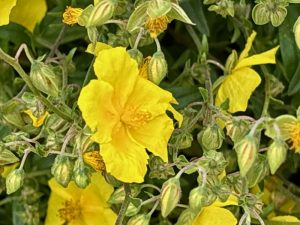
This evergreen shrub maintains its foliage year-round, forming a dense, low mat no taller than 20 cm (8 inches) and spreading up to 30 cm (12 inches) or more. The foliage is small, narrow, and dark green with a subtle grey tint. From May through August, ‘Golden Queen’ bursts into bloom with bright lemon-yellow saucer-shaped flowers, each petal delicately marked with orange at the center. These radiant blooms appear in profusion, often smothering the foliage in color.
How to Grow Helianthemum ‘Golden Queen’
Light
‘Golden Queen’ thrives in full sun, where it produces the most abundant blooms. It can tolerate partial shade, but flowering will diminish.
Soil
This plant needs sharply-drained soil to prevent root rot, especially during wet winters. Sandy, gritty, or gravelly loams with a neutral to alkaline pH are ideal. Avoid heavy clay or poorly-draining sites.
Watering
Once established, ‘Golden Queen’ is drought-tolerant. During its first growing season, water regularly to help roots settle. Thereafter, it only requires occasional watering during prolonged dry spells. In containers, monitor moisture levels more closely and water freely during active growth.
Fertilizing
In fertile garden soils, fertilization is unnecessary. In lean or rocky soil, a balanced, low-nitrogen fertilizer applied in early spring will support healthy growth. Over-fertilizing, especially with high-nitrogen formulas, may reduce flowering.
Pruning
After the primary flowering flush in midsummer, lightly shear back spent blooms to maintain a tidy form and encourage possible repeat flowering. Avoid cutting into old wood, which does not resprout. Every 2-3 years, rejuvenate the plant by cutting back to 15 cm (6 inches).
Hardiness and Seasonal Interest
‘Golden Queen’ is hardy in USDA Zones 8b–9a, tolerating minimum temperatures down to -9.4°C (15°F). In regions prone to wet winters, protect the root zone with gravel mulch or ensure excellent drainage. Although it may not flower through winter, the evergreen foliage retains its form and color year-round.
Propagation
Softwood cuttings taken in late spring or early summer root easily. Alternatively, divide mature clumps every 4-5 years in spring to rejuvenate and expand your planting.
Pests and Diseases
Generally disease- and pest-resistant, Helianthemum ‘Golden Queen’ may develop root rot in heavy or wet soils. In containers, vine weevil can be a concern; monitor for damage and use biological controls if needed.
Design and Wildlife Value
Perfect for sunny banks, dry borders, alpine troughs, and cascading over stone walls, this compact rock rose is especially useful in drought-tolerant or coastal plantings. It pairs well with other Mediterranean natives and alpine perennials. ‘Golden Queen’ attracts bees and butterflies and resists browsing by deer and rabbits.
Summary
For gardeners seeking a low-maintenance, long-flowering, and visually uplifting groundcover, Helianthemum ‘Golden Queen’ is a top choice. With its vivid blooms, evergreen habit, and tolerance of sun and drought, it brings lasting color and cheer to the garden with minimal effort.