A Compact Star in White: Growing Alstroemeria ‘Colorita® Claressa‘
Alstroemeria ‘Colorita® Claressa‘, also known as the Colorita® Claressa Peruvian Lily, is a dazzling compact perennial that brings continuous elegance from spring through fall. Its crisp white blooms, paired with glossy variegated foliage and a compact, tidy form, make it a top choice for containers, borders, and floral arrangements. Not only is it easy to care for, but it also brings pollinators to the garden and performs reliably in many climates.
Plant Family and Origins of Alstroemeria ‘Colorita® Claressa’
Alstroemeria ‘Colorita® Claressa’ belongs to the family Alstroemeriaceae. This genus is native to the mountainous regions of South America, primarily Chile and Brazil. The genus name Alstroemeria was given in honor of Swedish botanist Claus von Alstroemer, who introduced the plant to Europe in the 18th century. ‘Colorita® Claressa’ is a hybrid developed in the Netherlands by Royal Van Zanten as part of their Colorita series, which was specifically bred for container culture and compact growth.
Description of Flowers and Foliage
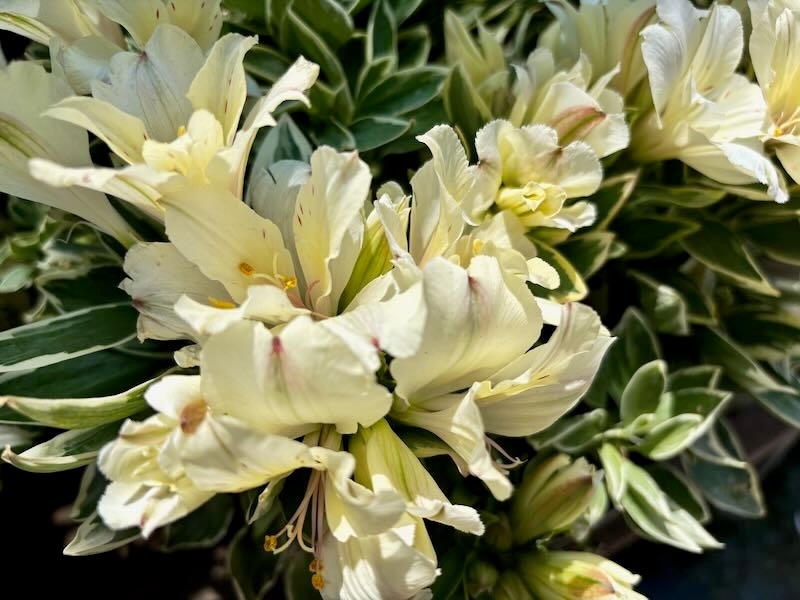
Flowers: The standout feature of ‘Claressa’ is its refined, trumpet-shaped blooms. These elegant flowers are pure white, highlighted by a golden-yellow throat and fine burgundy streaks that add contrast and depth. Each bloom appears in a cluster atop sturdy stems, lasting up to two weeks in floral arrangements.
Foliage: The foliage is a lush, glossy green with a striking variegated edge that adds visual interest even when the plant is not in bloom. Leaves are lance-shaped and grow in a unique resupinate form, twisting 180 degrees as they emerge.
Size and Habit: With a mature height and spread of about 35 cm (14 inches), this cultivar stays compact and mounded, making it ideal for tight garden spaces and decorative containers.
Flowering Season and Growth Habit
Alstroemeria ‘Colorita® Claressa’ begins flowering in late spring and continues through fall. Thanks to its vigorous but compact growth habit, it maintains a neat appearance throughout the growing season. Removing spent flower stems encourages additional blooms and supports the plant’s long flowering cycle.
How to Grow Alstroemeria ‘Colorita® Claressa’
Light
This perennial thrives in full sun to partial shade. Ideally, it should receive at least 6 hours of direct sunlight daily for the most prolific flowering.
Soil
‘Claressa’ prefers fertile, well-draining soil. Adding compost or other organic matter enhances soil quality and ensures good drainage. A slightly acidic to neutral pH range is ideal.
Watering
Keep the soil consistently moist but never soggy. Allow the top inch (2.5 cm) of soil to dry out slightly between waterings. In hot climates or during dry spells, more frequent watering may be necessary, particularly in containers.
Fertilizing
Apply a balanced, water-soluble fertilizer every 4 weeks during the blooming season. This supports strong flower production and maintains vibrant foliage.
Mulching
Apply mulch around the base of the plant to conserve moisture, suppress weeds, and regulate soil temperature. Organic mulches such as bark or compost are ideal.
Deadheading
For continuous blooming, remove spent flower stems by pulling them gently from the base. This signals the plant to produce new flowers.
Pruning
Minimal pruning is needed. Trim away any damaged or dead foliage, and clean up the plant in early spring before new growth emerges.
Dividing
Divide clumps every 2 to 3 years in early spring. This helps rejuvenate the plant, maintain vigor, and prevent overcrowding.
Container Growing
Alstroemeria ‘Colorita® Claressa’ is perfectly suited for containers due to its tidy growth and decorative appeal. Choose a container with adequate drainage and use a high-quality potting mix. Container-grown plants may require more frequent watering and feeding.
Propagation
As a patented cultivar (Alstroemeria x ‘Zapriclair’ PP #25,588), propagation by division or cuttings is not legally allowed without a license. However, commercial growers may propagate it under license from the patent holder.
Pests and Diseases
Common pests include aphids and spider mites, especially in warm and dry conditions. Monitor plants regularly and treat infestations with insecticidal soap or neem oil. Keep foliage dry to minimize fungal issues like leaf spot or root rot, and ensure proper spacing for good air circulation.
Winter Care
In USDA Zones 8–11, ‘Claressa’ can overwinter in the ground. In colder zones, provide a thick mulch layer or overwinter container plants indoors. Cut back old stems and foliage in early spring before new shoots emerge.
Wildlife and Companion Plants
The flowers attract bees, butterflies, and hummingbirds, enhancing biodiversity. ‘Claressa’ also exhibits good deer resistance.
Companion Plant Ideas:
- Gaura (Gaura)
- Achillea (Yarrow)
- Crocosmia (Montbretia)
- Aster (Aster)
- Tulbaghia (Society Garlic)
- Canna (Canna)
Symbolism of Alstroemeria ‘Colorita® Claressa’
Alstroemeria is a symbol of friendship, mutual support, and devotion, making it a fitting choice for wedding bouquets or meaningful floral arrangements. The genus’ introduction to Europe by Claus von Alstroemer remains a charming part of its history.
Final Thoughts
Alstroemeria ‘Colorita® Claressa’ offers a wonderful blend of beauty, functionality, and ease of care. With its long bloom season, lush foliage, and resilience, it’s a valuable addition to gardens and patios alike. Whether you’re designing a formal border or filling a decorative pot, ‘Claressa’ stands out as a white-blooming perennial that keeps giving.